
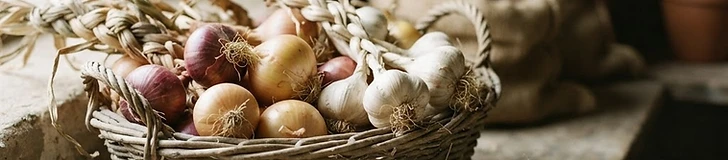
Successfully storing your Allium harvest and preserving cloves for next year allows you to enjoy homegrown flavor long after the garden beds go dormant. In this guide, you will learn how to maintain ideal storage conditions and select the best bulbs to propagate your own garden stock.
Curing for Longevity
Before storing, bulbs must be properly cured to seal the skin and prevent rot. After pulling from the soil, keep them in a well-ventilated, shaded area out of direct sunlight for two to four weeks. For onions, wait until the necks are completely dry and papery. For garlic, wait until the outer skins are dry and the roots become brittle. If you live in humid regions, consider using a small fan to assist airflow, keeping temperatures between 70°F and 80°F during this phase.
Perfect Storage Conditions
Once cured, your harvest needs a cool, dark, and dry environment to remain dormant. Aim for temperatures between 35°F and 50°F with humidity around 60%.
- Store onions in mesh bags or crates that allow maximum airflow.
- Never store potatoes and onions together, as the gases released by potatoes can cause onions to sprout prematurely.
- Keep garlic in a dark location to prevent greening and bitterness.
Pro tip: Use an old pair of pantyhose to store onions; tie a knot between each bulb to keep them separated and hanging, which prevents the pressure bruising that often leads to rot.
Selecting Cloves for Replanting
To keep your garden lineage going, reserve your largest, healthiest garlic bulbs for the next planting cycle. Avoid planting bulbs with any signs of mold, soft spots, or yellowing, as these traits can be passed down to the next generation. Save the biggest, most uniform cloves for your autumn planting, which typically happens in USDA zones 3–8 around the first frost date or when soil temperatures drop below 60°F. Placing these larger cloves 4–6 inches deep in well-draining soil ensures they have the energy to establish strong roots before the deep freeze sets in. By consistently selecting the best performing plants, you are essentially breeding a variety uniquely suited to your specific climate and soil conditions over time.