
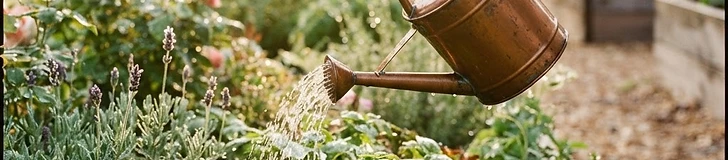
Most garden problems — blossom end rot, bitter lettuce, powdery mildew — trace back to the same culprit: inconsistent water. The fix is not more water. It's better water.
The one rule: deep and infrequent
A daily sprinkle trains roots to stay shallow, where they dry out the moment you skip a day. Instead, water deeply twice a week for in-ground beds, every 1–2 days for containers. Soak the root zone to 6 inches so roots reach down, not up. Push a trowel in after watering to check — if it's dry 4 inches down, water longer.
Time of day matters
Water in the early morning, before 9 a.m. Leaves dry fast as the sun rises, which shuts down fungal disease, and you lose far less to evaporation than at midday. Evening watering is second best; avoid it on tomatoes, squashes, and roses, which resent going to bed wet.
What to skip when it rains
If your forecast shows half an inch or more in the next 24 hours, let the clouds do the work. A $10 rain gauge tells you what actually fell — storms are patchier than apps suggest. Dovi flags approaching rain and skips a scheduled watering for you.
The finger test
Push a finger 2 inches into the soil. Cool and damp? Wait. Warm and dry? Water. Mulch with 2 inches of straw or leaves to stretch the time between waterings by days.
How much is 'an inch'?
Gardeners say 'an inch a week,' which is about 0.6 gallons per square foot. For a 4×8 raised bed that's roughly 19 gallons a week — split across two deep sessions. Put a tuna can under your sprinkler; when it fills, you've hit an inch.
Water at the soil, not the plant. Wet leaves invite disease; wet roots grow the garden.