
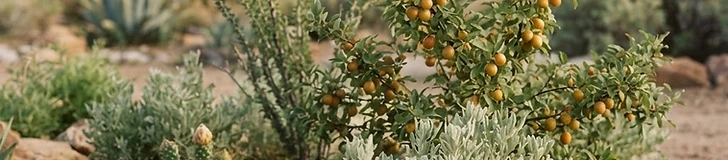
Gardening in arid regions requires a shift in strategy, focusing on plants that conserve resources while still providing beauty and food. By selecting drought-tolerant species, you can build a resilient landscape that thrives in USDA zones 7 through 10 despite limited rainfall and high temperatures.
The Power of Perennials
Choosing perennials means your garden establishes deep, drought-resistant root systems over time. Unlike annuals that require frequent hydration to produce, species like Lavandula (Lavender) and Salvia greggii (Autumn Sage) thrive in lean, well-draining soils with minimal supplemental water once established. These plants are built for desert life, often featuring fine or silvery foliage that reflects intense sunlight.
Selecting Hardy Fruits
Not all fruit trees demand gallons of water. If you live in an area with hot, dry summers, consider trees that tolerate arid conditions once they reach maturity.
- Punica granatum (Pomegranate) is a classic choice, producing delicious fruit with very low water requirements.
- Ficus carica (Fig) varieties like 'Desert King' handle extreme heat well and offer multiple harvests per season.
- Ziziphus jujuba (Jujube) thrives in 100°F heat and remains largely pest-free in dry climates.
Pro-tip: Always apply a 3-inch layer of organic mulch, such as wood chips or gravel, around the drip line of your perennials to keep soil temperatures low and evaporation rates to a minimum.
Planting for Success
Success begins at the installation phase. Follow these steps to ensure your new additions take hold:
- Dig a hole twice as wide as the root ball to encourage horizontal root expansion.
- Backfill with native soil rather than heavy amendments to prevent water-trapping zones.
- Install a simple drip irrigation system to deliver water directly to the root zone, rather than spraying overhead where moisture is lost to the wind.
Monitoring and Maintenance
Even drought-hardy plants need assistance during their first year. Keep a close eye on moisture levels during the first 12 months, checking soil depth with a finger to ensure the root ball isn't drying out completely. Once the root systems penetrate the native soil, you can transition to infrequent, deep watering sessions that encourage the plants to seek deep moisture on their own.
Start small by replacing one thirsty landscape section with a native, drought-hardy perennial today.