
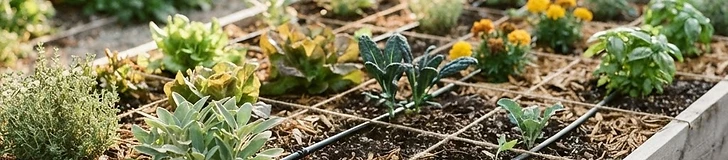
Achieving a lush, high-density garden in a small footprint requires smart water management, especially when the summer heat climbs above 85°F. By combining precision drip irrigation with effective mulching, you can maintain consistent soil moisture, reduce evaporation, and keep your plants thriving throughout the growing season.
Installing Drip Irrigation
Traditional overhead watering often loses moisture to evaporation before it reaches the root zone. Drip irrigation delivers water directly to the soil, which is essential in a densely planted 4x4 or 4x8 foot grid. Use a simple drip kit with quarter-inch emitters spaced to match your plant density.
- Lay out your mainline tubing along the perimeter of your grid.
- Connect 1/4-inch microtubing to reach each individual square.
- Position one or two emitters per square, depending on whether you are growing thirsty crops like Solanum lycopersicum (tomatoes) or smaller greens.
The Power of Mulching
Applying a layer of organic mulch acts as a protective blanket for your soil. In a square-foot garden, it prevents the sun from baking the surface, which keeps root temperatures stable. Apply 2 to 3 inches of straw, shredded leaves, or wood chips around your plants once they reach a few inches in height. This barrier also suppresses weeds that compete for your garden’s limited resources.
Pro Tip: Always water your grid deeply at the base of the plant in the early morning; keeping the foliage dry helps prevent common fungal diseases that thrive in humid environments.
Scheduling for Success
Even in efficient systems, soil moisture needs vary by climate and plant stage. In USDA Zones 7 through 9, your garden may require more frequent watering during peak July heat. Check your soil moisture by sticking a finger 2 inches into the mix—if it feels dry, it is time to run your system. Adjust your timer to run for 15 to 30 minutes, ensuring the water penetrates the deep root zone rather than just wetting the surface.
Routine Maintenance
Monitor your system monthly to ensure lines are not clogged and mulch remains at the recommended depth. Adding a fresh layer of mulch halfway through the season replenishes what has broken down, ensuring your grid remains water-wise until the first frost.