
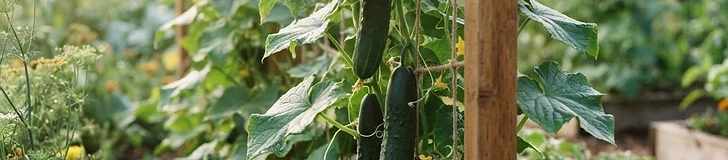
Growing Cucumis sativus vertically is the secret to a productive vegetable garden, especially when space is limited. By training vines to climb rather than sprawl across the soil, you improve airflow, simplify harvesting, and keep fruits clean, resulting in healthier plants and higher yields.
Why Go Vertical?
Traditional sprawling cucumbers occupy 6 to 10 square feet per plant, often leading to rot when damp fruit touches the soil. Trellising lifts the plant away from moisture-borne pathogens like downy mildew and powdery mildew. In climates ranging from USDA zones 3 to 10, vertical growing is highly effective because it allows leaves to absorb maximum sunlight and facilitates rapid drying after rain.
Choosing Your Support
Select a structure that matches your variety. For small, container-friendly bush varieties, a simple A-frame trellis works perfectly. For vigorous, vining slicers or picklers, use a sturdier system:
- Cattle panels: Extremely durable for heavy vining crops.
- Nylon netting: Affordable and easy to attach to existing fences.
- Bamboo stakes: Best for DIY teepee designs.
Pro Tip: Ensure your trellis is installed before planting, as pushing supports into the soil later can damage the cucumber's delicate root system.
Planting and Training
Plant your cucumbers in rich, well-draining soil in a spot receiving at least 6–8 hours of full sun. Temperatures should consistently stay above 60°F before transplanting. Once your seedlings reach about 6 inches in height, they will naturally begin producing tendrils. Gently guide these tendrils toward your trellis. You may need to use soft garden twine or cloth strips to loosely secure the main stem until it begins to grip the structure on its own.
Maintenance for Success
Vertical plants require consistent care to thrive. Because they are elevated, they dry out faster than ground-level plants. Keep the soil consistently moist, targeting 1 to 2 inches of water per week. Regularly prune away any yellowing or diseased lower leaves to keep the plant's energy focused on fruit production. As fruits ripen, harvest them frequently to encourage the plant to continue flowering and producing until the first frost of the season.