
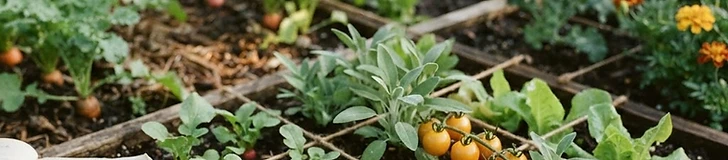
Tracking your harvest turns a backyard hobby into a productive science. By recording how much food you pull from each 12x12-inch space, you can identify which varieties thrive in your specific USDA zone and which ones aren't worth the soil real estate. This guide helps you turn those handfuls of produce into actionable data.
The Weigh-In Method
To calculate productivity, you need a small digital kitchen scale. When harvesting, weigh your crops in ounces or grams immediately. If you are growing Lactuca sativa (lettuce) or other cut-and-come-again greens, keep a running log for every harvest session from that specific square. Recording these numbers allows you to compare the efficiency of a high-yield crop like cherry tomatoes against a slower grower like Capsicum annuum (peppers).
Setting Up Your Log
Simplicity is key for consistency. Use a garden journal or a simple spreadsheet to track your squares. Label your grid areas by number (e.g., A1, A2). For each square, record:
- The crop variety.
- The date planted and date harvested.
- The total weight in ounces.
Keep your scale near your wash station; if you have to walk back into the kitchen to weigh your harvest, you are much more likely to skip the data entry process.
Analyzing Yield Efficiency
Once you have a season of data, calculate your yield per square foot. If you planted four Raphanus sativus (radishes) in one square and harvested them in 30 days, your yield is the sum of those individual weights. Compare this to a single Solanum lycopersicum (tomato) plant that occupied an entire square for 90 days. You will quickly see which crops provide the best caloric or nutritional return for the time and space they require.
Adjusting for Next Season
Use your results to optimize your planting strategy. If a square consistently produces low yields despite proper care, consider switching that variety for a proven performer. Alternatively, if your yield is high but the flavor isn't there, you have the data to justify replacing that variety while keeping the spacing the same. High-density gardening is about constant refinement, and your harvest journal is the ultimate tool for year-over-year improvement in your home garden.