
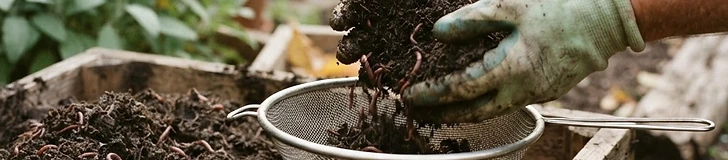
Harvesting your worm bin is the most rewarding part of vermicomposting, but beginners often worry about accidentally harming their worms. With the right technique, you can easily separate the dark, crumbly castings from your colony without stress. This guide will show you how to maintain your bin's productivity while gathering high-quality fertilizer for your garden.
The Light Migration Method
The easiest way to separate castings from Eisenia fetida (red wigglers) is using their natural aversion to light. Worms prefer damp, dark environments and will quickly burrow away from a bright light source. To begin, dump your bin contents onto a plastic sheet under a bright lamp or in direct sunlight. Wait about 10 to 15 minutes, then gently scrape off the top layers of finished castings. The worms will dive deeper, allowing you to harvest the top and sides repeatedly until you are left with a small pile of wigglers at the bottom.
The Horizontal Migration Strategy
If you prefer a less disruptive approach, use the horizontal migration technique. Simply push all the existing contents to one side of your bin. Add fresh, damp bedding and a handful of food scraps to the empty side. Over the next two weeks, the worms will naturally migrate toward the fresh food, leaving the finished castings behind in the original section. Once the population has moved, you can easily scoop out the clean material.
Tip: To speed up migration, withhold food from the bin for 5 to 7 days before starting the process; the hungry worms will move toward the new food source much faster.
Proper Storage and Timing
After harvesting, ensure your vermicompost is stored correctly to preserve the beneficial microbial life. Keep the material in a breathable container, such as a cloth bag or a bucket with air holes, in a cool area between 50°F and 75°F. Avoid letting the castings dry out completely, as moisture is essential for the microbes to remain active. If you harvest in spring, your castings will be ready to boost your vegetable starts and flower beds just in time for the growing season.
Troubleshooting Clumps
If you find your castings are too wet and sticky, incorporate more shredded newspaper or cardboard before storage to improve airflow. By harvesting regularly, you prevent the bin from becoming anaerobic and ensure your worms have enough space to reproduce and thrive year-round. Happy gardening!