
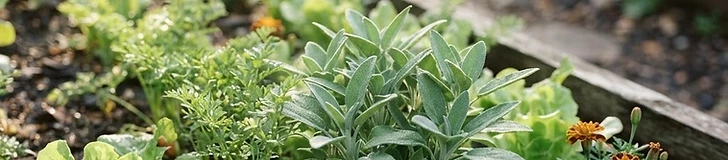
Gardening is often viewed as a solitary act of nurturing individual plants, but a truly productive garden operates as a complex, interconnected community. By choosing the right herbal companions for your vegetable patch, you can create a natural defense system that minimizes the need for synthetic interventions. Companion planting is the practice of positioning different plant species in close proximity to facilitate mutual benefits, such as pest confusion, nutrient accumulation, or pollinator attraction. For the US gardener, understanding these relationships is the key to moving from a struggling patch to a thriving, low-maintenance food source.
The Power of Aromatic Confusion
Many vegetable pests, such as aphids, cabbage moths, and flea beetles, rely heavily on their sense of smell to locate their preferred host plants. Vegetables like broccoli, kale, and tomatoes emit specific chemical signals that act as a dinner bell for hungry insects. Herbs act as olfactory camouflage. By planting strong-smelling herbs like dill, cilantro, and oregano around the perimeter of your brassicas, you mask the scent of the vegetables. This makes it significantly harder for pests to land and colonize your crops. Aim to interplant these herbs every three to four feet throughout your beds, rather than grouping them only in one corner, to ensure the scent barrier is consistent across the entire garden footprint.
Boosting Biodiversity with Pollinator Magnets
While scent masking protects your crops, other herbs serve the equally important role of attracting beneficial insects. Parasitic wasps, hoverflies, and lacewings are the heavy lifters of the insect world, preying on garden pests like aphids and mites. To entice these allies into your garden, you need nectar-rich flowering herbs. Thyme and rosemary are excellent choices, especially when allowed to bloom before you harvest the foliage. Planting these perennial herbs in USDA hardiness zones 6 through 9 allows them to establish deep root systems and offer a steady supply of nectar throughout the growing season. By ensuring there is always something in bloom, you build a permanent sanctuary that keeps your pest-predator population high, reducing the chances of a sudden infestation.
Improving Soil Health and Nutrient Availability
Certain herbs act as dynamic accumulators, mining nutrients from deep within the soil and making them available to shallow-rooted vegetables once their leaves decay or are pruned back. Chives are particularly effective in this role. Not only do they produce beautiful, edible purple flowers that attract bees, but they also possess antifungal properties. When planted near roses or tomatoes, chives help prevent common fungal issues like black spot or blight. Furthermore, the root systems of chives are relatively compact, meaning they do not compete aggressively with your vegetables for water or space. Treat them as living borders that improve the health of the soil surrounding your more sensitive crops.
Managing Your Herb Space
Not every herb plays well with every vegetable. For example, fennel is notoriously allelopathic, meaning it secretes chemicals that can inhibit the growth of many other plants, including tomatoes and beans. Keep your fennel in a separate container or at the far edge of your garden. Conversely, basil and tomatoes are a classic pairing for a reason. Basil is thought to improve the flavor of tomatoes while helping to repel hornworms and flies. In your own garden, try to plant basil directly beneath your tomato cages or in the gaps between plants. Ensure the basil receives at least six to eight hours of sunlight, as it will thrive in the same environment required for peak tomato production.
Practical tips
- Plant cilantro near your lettuce crops; the shade from the taller cilantro can help keep the lettuce cool, extending the harvest window before it bolts in the summer heat.
- Allow your parsley to go to seed in its second year. The resulting umbel flowers are prime landing pads for beneficial predatory insects.
- Use oregano as a ground cover beneath tall-growing peppers; the dense foliage keeps the soil moist and suppresses weeds without robbing the peppers of essential nutrients.
- Remember that herbs in containers can be moved around; if you notice a particular bed suffering from pest pressure, place a pot of blooming lemon balm or peppermint nearby to act as a temporary deterrent.
- Always keep a garden journal to track which pairings work in your specific USDA zone. What thrives in a humid Southern climate may require different spacing in the arid West.
Quick takeaway
Integrate aromatic herbs throughout your vegetable beds to mask plant scents, attract beneficial predators, and improve soil health for a more resilient, self-sustaining garden.