


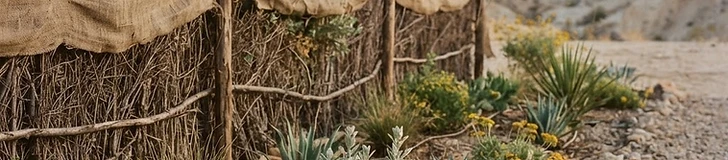
Desert gardening is often a battle against the elements, specifically the high-velocity winds that strip moisture from soil and damage tender vegetable starts. By implementing effective windbreaks, you can create a microclimate that shields your plants and keeps your garden dust-free.
Establishing Structural Barriers
Before planting trees, install physical windbreaks to provide immediate protection. Rigid structures like lattice panels, shade cloth, or even repurposed pallets break the wind’s force rather than stopping it completely. If a barrier is too solid, wind will simply bounce off and create turbulent eddies on the other side. Aim for 50% porosity to allow air to filter through, which significantly slows down gusts without causing backdrafts. Secure these frames at least 2 feet deep into the soil to withstand seasonal gusts common in USDA Zones 7–10.
Planting Living Windbreaks
For a permanent solution, incorporate native shrubs that tolerate the intense heat and dry conditions of arid regions. Densely branched plants act as natural filters for dust. Consider using Atriplex canescens (Four-wing saltbush) or Cercocarpus ledifolius (Curl-leaf mountain mahogany). These species are drought-hardy and provide a habitat for beneficial insects. Space them close enough so their branches eventually touch, forming a continuous hedge that intercepts airborne grit before it reaches your vegetable beds.
Pro Tip: Always position your windbreak on the windward side of your garden based on the prevailing wind direction of your specific site to ensure maximum protection for your most delicate crops.
Managing Soil Surfaces
Wind often carries fine silt that can bury small seedlings and dehydrate the top layer of your soil. To prevent dust migration, maintain a robust layer of organic mulch. Straw, wood chips, or even gravel 2–3 inches deep will lock moisture into the ground and keep topsoil from blowing away. If you have an empty garden bed, cover it with burlap or a specialized landscape fabric during the windy season to keep the soil structure intact.
Irrigation for Wind-Resistant Landscapes
Wind increases the transpiration rate of plants, meaning your garden will need more water than the ambient temperature suggests. Use drip irrigation placed directly beneath your mulch layer to ensure water reaches the roots without being lost to the wind. Regularly check your systems, as blowing debris can clog emitters quickly.
With a thoughtful combination of permeable structures and hardy native plants, you can successfully shield your desert oasis from the harshest winds.