
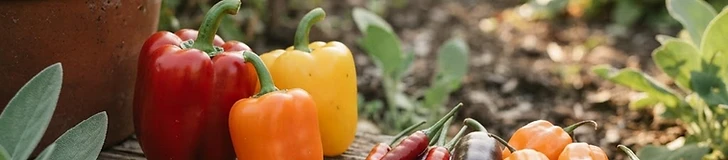
Choosing which peppers to grow in your home garden starts with understanding the Scoville Heat Unit (SHU) scale and matching varieties to your culinary goals. Whether you want crunchy snacks for salads or fiery ingredients for homemade hot sauce, selecting the right plants is the first step toward a successful harvest.
Understanding the Heat Spectrum
All peppers belong to the species Capsicum annuum, though some hotter types fall under different classifications like Capsicum chinense. The heat in peppers comes from a compound called capsaicin.
- Sweet Peppers: These contain zero capsaicin and rate 0 on the Scoville scale. Common varieties include Bell, Gypsy, and Carmen.
- Mild Peppers: These offer a hint of warmth, usually between 100 and 2,500 SHU, such as Poblanos or Anaheim.
- Hot Peppers: Ranging from 2,500 up to over 1,000,000 SHU, these include Jalapeños, Serranos, and Habaneros.
Matching Peppers to Your Climate
Peppers are heat-loving crops that perform best when night temperatures consistently stay above 60°F. If you are gardening in cooler regions like USDA zones 3–5, prioritize early-maturing varieties that reach harvest in under 70 days. In warmer zones (8–10), you have the luxury of growing long-season, super-hot varieties that take 90+ days to ripen.
Pro Tip: If you want to grow super-hot varieties like Habaneros in short-season areas, start your seeds indoors 8–10 weeks before your last frost date and transplant them into black plastic mulch to keep the soil warm.
Practical Gardening Steps
To ensure your peppers thrive throughout the season, follow these basic care requirements:
- Choose a location that receives at least 8 hours of full sun daily.
- Space plants 18–24 inches apart to ensure good airflow and prevent fungal diseases.
- Water deeply once the top 1 inch of soil feels dry to the touch.
- Use a balanced, low-nitrogen fertilizer once flowers begin to set fruit.
Selecting for Your Kitchen
When deciding what to plant, think about how you use peppers in the kitchen. If you enjoy roasting, look for thick-walled varieties like Poblanos. For fresh snacking, focus on sweet Bells or mild Banana peppers. If you love heat, plant one or two high-yield plants of a mid-range heat variety like a Jalapeño, as a single plant can produce dozens of peppers over a long season.
Matching your pepper choices to both your climate and your palate will ensure a productive season filled with the exact flavors you enjoy.