
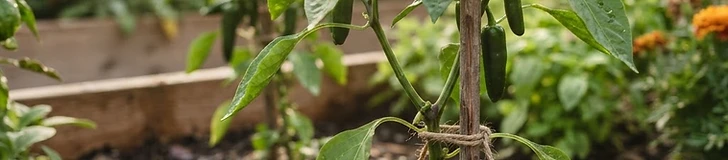
Pruning and staking your pepper plants ensures they stay upright, productive, and free from diseases as they grow throughout the warm season. This guide will help you manage your Capsicum plants for a bountiful harvest.
Why Prune Peppers
Proper pruning improves airflow and light penetration, which reduces the risk of fungal issues in humid US climates. By removing a few select branches, you redirect the plant's energy into fruit production rather than excessive vegetative growth. Focus on removing the lower leaves that touch the soil, as these often harbor soil-borne pathogens that can splash onto the plant during watering.
The Art of Staking
Because heavy fruit loads can cause branches to snap during summer thunderstorms, staking is essential. Install your stakes at the time of planting to avoid damaging the fragile root system later. Whether using wooden stakes or tomato cages, ensure the support is at least 3 to 4 feet tall to accommodate the plant's mature height.
- Drive the stake 6 inches into the ground near the base of the stem.
- Use soft garden twine or fabric strips to secure the main stem to the stake.
- Tie the plant loosely, allowing room for the stem to expand in diameter as it grows.
Pro tip: Pinch off the very first set of blossoms that appear on your pepper plants while they are young. This forces the plant to prioritize root and foliage development before committing to fruit production, resulting in a much larger harvest later in the season.
Monitoring Growth
As your plants grow in temperatures above 70°F, continue to check your ties. If a branch looks heavy or is bowing under the weight of ripening peppers, add a support tie specifically for that branch. In Zones 3 through 9, where peppers are grown as annuals, keep the area around the base of the plant free of weeds to minimize competition for nutrients.
Maintaining Health
Regular maintenance involves gently removing suckers or crossing branches that crowd the center of the plant. A well-pruned plant should look open and airy, allowing pollinators easy access to the flowers. Always disinfect your shears with rubbing alcohol between plants to prevent the spread of viruses or blight.
Following these simple structural habits will keep your pepper plants vigorous and fruitful until the first frost of the season.