
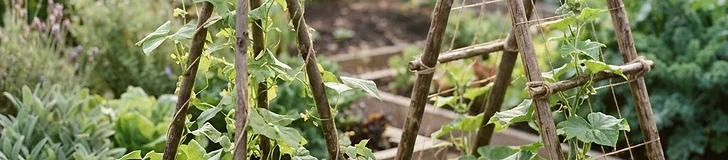
Vertical gardening is the most effective way to save space and improve plant health in your home garden. By elevating your crops, you increase airflow and reduce fungal diseases caused by soil contact. This guide will help you build reliable structures for your vining vegetables.
The Teepee Advantage
A teepee trellis is ideal for climbing beans and morning glories. Its conical shape is inherently stable, making it perfect for wind-prone areas. To build one, gather four or five sturdy bamboo poles or cedar stakes, each at least 6 to 8 feet long. Gather the tops together and lash them tightly with rot-resistant garden twine. Spread the base to roughly 3 feet in diameter and press the stakes deep into the soil. For pole beans, plant two seeds at the base of each stake.
Constructing an A-Frame
The A-frame trellis is the workhorse of the vegetable garden, perfect for heavy crops like cucumbers or smaller squash varieties. It features two rectangular panels joined at the top to create a ridge. You can build these from reclaimed lumber or PVC pipe. Secure the two panels with heavy-duty hinges at the apex so they can be folded flat for winter storage. Ensure the base is at least 30 inches wide to prevent the structure from tipping when your crops reach maturity.
Pro tip: Always secure your trellises with landscape staples or ground anchors; a sudden summer thunderstorm with winds over 30 mph can easily topple a fully loaded trellis if it is not pinned to the earth.
Selecting Your Materials
When choosing materials, prioritize longevity and safety. If you are gardening in USDA zones 5 through 9, your structures will face intense UV exposure and moisture. Use naturally rot-resistant wood like cedar or redwood, or choose UV-stabilized plastic netting. Avoid using pressure-treated wood if you are growing edible crops, as chemicals can leach into the soil. For vertical growth, utilize nylon netting stretched between your support frames to give tendrils an easy grip.
Maintenance and Safety
Check your connections every three weeks during the growing season. As plants like Cucumis sativus (cucumber) gain weight, they exert significant pressure on horizontal supports. Replace any fraying twine immediately to prevent sudden collapse. By maintaining these structures, you ensure a season-long bounty and protect your harvest from ground-level pests. Proper support makes gardening easier and more productive all season long.