
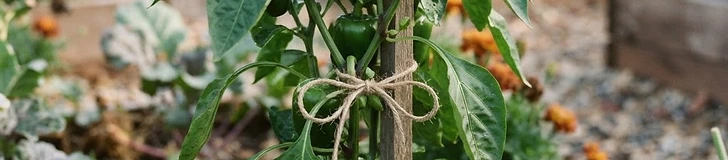
Keeping your pepper plants (Capsicum annuum) sturdy is the key to preventing stem breakage during heavy summer storms. By combining early pruning with proper staking, you protect your crop and direct energy toward fruit production.
The Role of Pruning
Early pruning encourages bushy, resilient plants rather than tall, spindly ones. When your pepper seedling is about 12 inches tall, you can pinch off the very tip of the main stem. This forces the plant to create multiple lateral branches, resulting in a broader canopy that produces more fruit. Be sure to use clean garden shears or your fingers to make precise cuts just above a leaf node.
Choosing Your Stakes
Proper staking ensures your plant can support the weight of heavy bell or specialty peppers without snapping. Even if you live in cooler regions like USDA zones 4 or 5, you should install your supports immediately after transplanting. Delaying this step can damage the sensitive root system later in the season.
- Use a sturdy cedar or bamboo stake, at least 3 to 4 feet tall.
- Drive the stake 6 inches deep into the soil about 2 inches away from the main stem.
- Secure the plant using soft garden ties or strips of old cotton cloth.
Always leave a little slack in your plant ties to prevent the material from cutting into the stem as the plant thickens throughout the summer heat.
Managing Suckers and Foliage
As the season progresses, check your plants for suckers—the small shoots that develop in the crotch between the main stem and the branches. Removing these helps improve airflow, which is critical for preventing fungal diseases in humid climates. Simply snap them off with your fingers when they are small. Additionally, if the lower leaves are touching the soil, trim them back to prevent soil-borne pathogens from splashing onto the foliage during rain or irrigation.
Routine Maintenance
Check your ties every few weeks as the plant grows to ensure they remain secure but not constricting. If temperatures consistently exceed 90°F, keep a close watch on your plants; heat-stressed peppers may wilt, but a well-staked plant will recover much faster once the sun dips and soil moisture is restored. Consistency in these small structural tasks will lead to a cleaner, more bountiful harvest come autumn.
A little effort spent on structure early in the season pays off with healthier plants and higher yields at harvest time.