
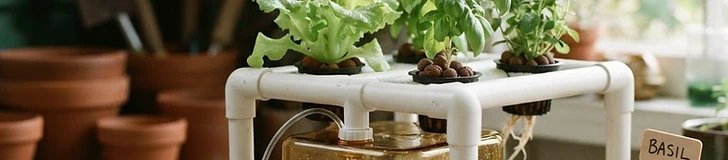
Diving into hydroponics allows you to grow fresh produce anywhere in your home, regardless of your USDA zone or outdoor soil quality. This guide introduces the Deep Water Culture (DWC) method, the most accessible way to start gardening without soil.
Essential Supplies
To build a basic reservoir system, you will need a few inexpensive items from your local hardware or garden store:
- A 5-gallon opaque plastic bucket with a lid (light must be blocked to prevent algae).
- A net pot (3 inches in diameter).
- An air pump and air stone (essential for oxygenating the water).
- A hydroponic nutrient solution designed for leafy greens.
- Expanded clay pebbles or rockwool cubes to support the roots.
Preparing the Reservoir
Choose a location that stays between 65°F and 75°F. Cut a hole in the center of your bucket lid to fit the net pot snugly. Place the air stone at the bottom of the bucket, connecting it to the air pump outside. Fill the bucket with water until it touches the very bottom of the net pot; this allows the growing medium to wick moisture upward to the seedling roots.
Pro tip: Always check your water pH once a week; aim for a range between 5.5 and 6.5 to ensure your plants can effectively absorb the nutrients you provide.
Planting and Maintenance
Place your starter seedling into the net pot, securing it with clay pebbles. As the plant grows, the roots will eventually dangle into the nutrient-rich water below. Ensure the water level drops slightly as the plant matures, exposing a portion of the upper roots to the air gap for better oxygen exchange.
Lighting and Growth
Hydroponic plants thrive under high-quality LED grow lights when natural sunlight is insufficient. Provide 12 to 16 hours of light daily. Lactuca sativa (lettuce) and Ocimum basilicum (basil) are excellent beginner choices that often reach harvestable size in just 30 to 45 days.
With just a bucket and a bit of light, you can enjoy homegrown harvests even in the middle of a cold winter.