
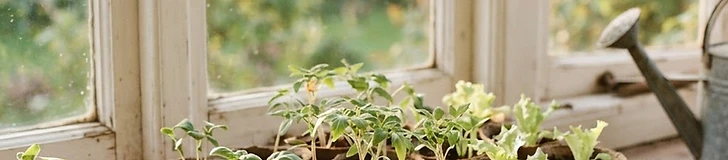
Starting your own seeds costs a fraction of nursery transplants and unlocks varieties you'll never find in a cell pack. The trick is timing and light.
Count back from your last frost
Find your average last spring frost date, then count back 6–8 weeks for tomatoes, peppers, and eggplant; 4 weeks for brassicas and lettuce; 2 weeks for cucumbers and squash. Sow too early and you'll have leggy, root-bound teenagers waiting for warm soil.
The setup
You need three things:
- A tray with drainage and a humidity dome (a plastic clamshell works).
- A seed-starting mix — never garden soil. It's too dense and invites damping-off fungus.
- Light, 2 inches above the tops, for 14–16 hours a day. A sunny window is almost never enough; a cheap shop light with cool bulbs does the job.
Sow and water
Sow seeds twice as deep as they are wide, mist, and cover. Bottom-water once sprouted so you don't knock seedlings over. Keep the mix at 65–75°F — a heat mat speeds germination dramatically for heat lovers.
Pot up before they stall
When true leaves appear, transplant to a 3–4 inch pot. A seedling left too long in a tiny cell becomes root-bound and never catches up.
Harden off — don't skip this
A week before transplanting, set seedlings outside for a few hours, adding time and wind each day. Skipping this step kills more seedlings than frost. Leaves need to thicken to real sun and moving air.
Keep a sticky note of your sowing dates — your future self will thank you when transplant time comes.