
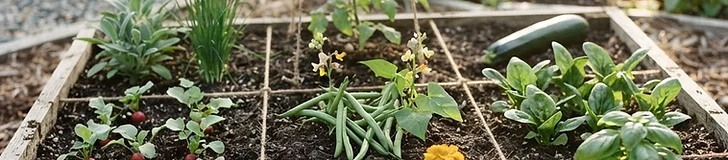
Square-foot gardening turns small patches into high-yield food hubs by prioritizing organized, intensive spacing. You will learn how to structure your beds, space your crops efficiently, and prepare the ideal soil base for your vegetables to thrive.
Setting the Grid
To start, divide your raised bed into a literal grid of 12-inch by 12-inch squares using twine, wood laths, or permanent markers. This visual organization removes guesswork, allowing you to treat each square as a specific growing zone rather than planting in long, wasteful rows. A standard 4x4 foot bed provides 16 squares, which is more than enough for a beginner to manage.
Calculating Plant Spacing
Proper density depends on the plant size. Use these guidelines to fill your squares:
- 1 plant per square: Large vegetables like tomatoes, peppers, or cabbage.
- 4 plants per square: Medium crops like bush beans, lettuce, or Swiss chard.
- 9 plants per square: Small crops like spinach or beets.
- 16 plants per square: Compact crops like carrots or radishes.
If you are gardening in USDA zones 6-8, ensure your soil temperature is at least 65°F before planting warm-season starts like tomatoes to avoid stunted growth.
Mixing Your Foundation
Standard garden soil often compacts too much for intensive planting. You need a light, moisture-retentive substrate known as Mel's Mix. Combine these three components in equal parts by volume:
- Blended compost: Provides essential nutrients from diverse sources.
- Peat moss or coconut coir: Retains moisture while providing excellent drainage.
- Coarse vermiculite: Keeps the soil aerated and loose for easy root penetration.
Maintaining Your Soil
Because square-foot gardens are densely planted, the soil works harder than in traditional rows. Replenish your beds by adding a handful of fresh compost into each square after you pull up a harvested crop. This simple step keeps your nutrients high and your soil structure ready for the next round of planting. With your grid established, healthy soil in place, and spacing rules followed, your garden will produce significantly more food per square inch than any row-based system.