
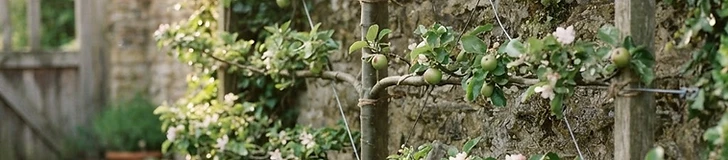
Maximize your garden’s footprint by training fruit trees against a flat surface. Espalier is a historic pruning technique that encourages trees to grow in two dimensions rather than three, making it perfect for USDA zones 4 through 9 where space is at a premium. By managing growth patterns, you can grow apples, pears, or figs in as little as 18 inches of width.
Selecting Your Tree
Not every fruit tree takes kindly to this training, so choose wisely. Pome fruits like Malus (apple) and Pyrus (pear) are the gold standard for beginners because they are naturally flexible and forgiving. Look for trees grafted onto semi-dwarfing or dwarfing rootstocks to ensure the tree remains manageable and produces fruit at a lower, harvestable height.
Setting Up Support
Before planting, you need a sturdy framework to guide the branches. On a fence or wall, install a series of horizontal galvanized steel wires spaced 12 to 18 inches apart. Use screw eyes and turnbuckles to keep the wire taut. Position your first wire about 18 inches from the soil line to start your base tier of branches.
Training for Production
Success relies on consistent branch manipulation. As the young tree grows, select two vigorous lateral branches growing in opposite directions and tie them gently to the wire using soft, stretchy plant ties.
Pro tip: Always use flexible ties rather than wire or zip ties to avoid girdling the bark as the trunk thickens throughout the growing season.
Seasonal Pruning
Maintain your shape with two distinct pruning sessions per year.
- Summer pruning: Remove vertical, non-fruiting "water sprouts" to keep the tree’s energy focused on horizontal fruit-bearing spurs.
- Winter pruning: Once the tree is dormant and temperatures drop below 40°F, cut back new growth to maintain your chosen pattern and encourage future bud development.
Watering and Care
Because these trees are often situated against walls that reflect heat, the root zone can dry out faster than orchard-grown trees. Apply a layer of organic mulch to keep roots cool and irrigate deeply once a week during the peak of summer. Monitoring for pests like aphids along the wall is essential, as the lack of airflow can sometimes create sheltered pockets for insects. Keep your trellis tidy and your harvests will follow.