
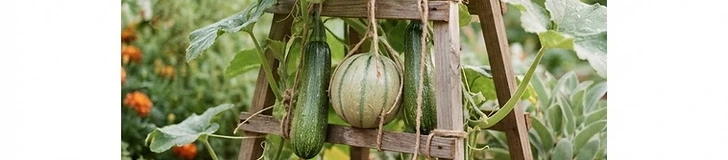
If you have limited space, you do not need to abandon your dreams of growing hefty squash or juicy melons. By training these vining crops to grow vertically, you can reclaim your garden floor, improve air circulation to prevent fungal diseases, and keep ripening fruit clean and away from hungry ground pests.
Selecting the Right Support
Because Cucurbita species like butternut squash and Cucumis melo varieties can become quite heavy, your structural support must be sturdy. Avoid flimsy plastic netting that can sag under the weight of mature fruit. Instead, use galvanized cattle panels, heavy-duty wire fencing, or strong wooden A-frame trellises. Ensure your structure is anchored at least 12 inches deep into the soil to prevent it from toppling during summer thunderstorms or high winds.
Training the Vines
As your seedlings develop their first true leaves, gently direct the main stems toward your trellis. Most squash and melon varieties produce tendrils that naturally grasp onto supports. If a vine seems hesitant, you can loosely secure it to the structure using soft garden twine or strips of old cotton fabric. Avoid using thin wire or zip ties, which can cut into delicate stems and disrupt the plant's nutrient flow.
The Art of Fruit Hammocks
Once your plants begin setting fruit, the heavy harvest requires extra care. Without assistance, a large watermelon or winter squash may snap its own stem or cause the vine to tear away from the trellis. Create fruit hammocks by cutting squares of old pantyhose, cheesecloth, or lightweight mesh fabric. Gently cradle each fruit in the fabric and tie the corners securely to the trellis frame, transferring the weight of the melon directly to the support structure.
Tip: Inspect your hammocks weekly as the fruit swells to ensure the material isn't cutting into the rind or causing moisture to trap against the skin.
Managing Heat and Sun
Vertical gardening exposes fruit to more direct sunlight, which is generally beneficial for ripening. However, in regions where summer temperatures frequently exceed 90°F, thin-skinned melons may suffer from sunscald. If you notice pale or scorched spots on your fruit, loosely drape a bit of shade cloth or garden fabric over the upper portion of the trellis to provide a cooling canopy for your harvest. With the right support and regular monitoring, you will enjoy a high-yielding, clean, and bountiful harvest that saves your back and your soil space.