
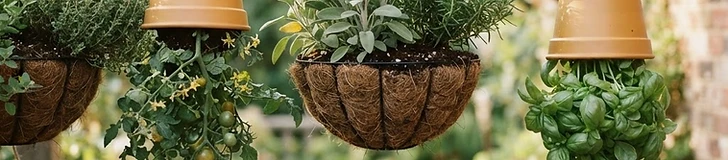
Vertical gardening is the ultimate space-saver for apartment dwellers and suburban gardeners alike. By lifting your crops off the ground, you can utilize vertical air rights to produce fresh harvests even on a tiny balcony or patio. This guide focuses on using hanging baskets and specialized upside-down planters to grow productive herbs and patio-style tomatoes.
Selecting Your Containers
Choosing the right vessel is critical for success. For hanging baskets, opt for a container at least 12 inches in diameter to ensure enough soil volume for root development. If you are planting an upside-down tomato planter, look for pre-made kits or DIY buckets with at least a 5-gallon capacity. Ensure your containers have sturdy metal hangers or high-tensile nylon straps to handle the heavy weight of moist soil and ripening fruit.
Perfect Plants for Hanging
Not every variety thrives in a container. For your hanging basket, select trailing herbs like Origanum vulgare (oregano), Thymus vulgaris (thyme), or Mentha (mint). If you are growing tomatoes, choose determinate or micro-dwarf varieties such as 'Tiny Tim' or 'Tumbler'. These cultivars are bred specifically for compact spaces and won't outgrow their vertical home.
Tip: When planting upside-down tomatoes, gently thread the root ball through the bottom opening before adding soil to avoid snapping the fragile main stem.
Soil and Watering Basics
Since containers dry out much faster than garden beds, moisture management is your top priority. Use a high-quality potting mix amended with perlite to improve drainage and aeration. Because gravity pulls water downward, hanging plants often need daily watering during the heat of summer. Once temperatures exceed 85°F, check the moisture levels twice a day. If your soil feels dry one inch below the surface, it is time to hydrate.
Maintenance and Care
- Feeding: Apply a balanced liquid organic fertilizer every two weeks, as nutrients wash out of hanging planters quickly during frequent watering.
- Sunlight: Most herbs and tomatoes require 6 to 8 hours of direct sunlight. Monitor your vertical display throughout the day to ensure it isn't trapped in constant shade.
- Pruning: Regularly trim back your herbs to encourage bushier growth and harvest tomatoes as soon as they reach full color to keep the plant productive.
With a bit of consistent care, your hanging garden will provide a steady supply of fresh produce all season long.