
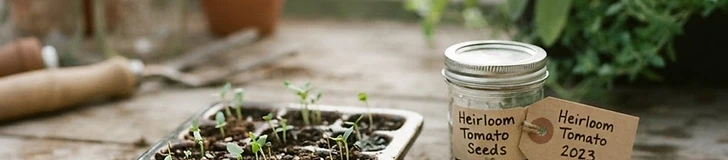
Preserving the seeds you gathered this autumn ensures your garden continues to thrive next season. By controlling environmental factors and verifying viability, you can save money and keep your favorite heirlooms growing in your USDA zone garden for years to come. ## Managing Storage Conditions The most critical factor for seed longevity is maintaining a stable, cool, and dry environment. Seeds are dormant, not dead, and moisture or heat will prematurely trigger respiration, depleting their stored energy. 1. Use glass jars or moisture-proof envelopes. 2. Place a small packet of silica gel inside containers to absorb residual humidity. 3. Store your containers in a dark, consistent space kept below 50°F, such as a cool basement or a designated refrigerator shelf. ## The Importance of Desiccation Before sealing your seeds, ensure they are bone-dry. If you harvest Solanum lycopersicum or Capsicum annuum seeds that still contain moisture, they will quickly mold in storage. Spread them on a paper towel in a well-ventilated room for at least two weeks away from direct sun. If they snap cleanly rather than bending when folded, they are ready for long-term storage. > Always label your packets with the plant variety and the exact month and year of harvest to track how quickly each species loses its natural germination potential. ## Running a Germination Test You do not need to guess if your saved seeds are still viable. Performing a simple germination test four to six weeks before your expected last frost date allows you to adjust your planting density if necessary. 1. Count out ten seeds of a specific variety. 2. Place them on a damp paper towel and roll it up loosely. 3. Slide the roll into a plastic bag and place it in a warm spot (70°F to 75°F). 4. After 7 to 14 days, count how many have sprouted. If eight out of ten sprout, you have an 80% germination rate, which is excellent for home garden use. ## Adjusting for Old Seeds If your test shows low viability, do not discard the seeds. You can simply plant them more densely to compensate for the higher failure rate. By following these storage and testing steps, you ensure your garden remains productive and resilient for the seasons ahead.
 Seed Starting & Saving
Seed Longevity: How to Store and Test Your Harvest
2 min read 375 words
Learn how to keep your saved garden seeds viable through the winter and how to test their germination success before planting season begins.
Watch & learn
Curated variety-trial and pest-ID videos related to this article.
#Seed Saving#Gardening Basics#Winter Prep#Heirloom Seeds