
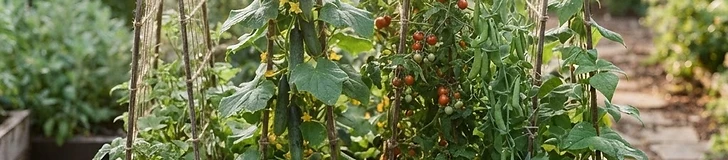
Adding vertical structure to your square-foot beds is the single best way to increase your yields without expanding your garden's footprint. By training vining plants to grow upward, you free up valuable soil squares for low-growing crops while improving airflow to prevent fungal diseases.
Choose Your Structure
For most home gardeners, a trellis or A-frame support is the ideal solution. If you are using a standard 4x4 foot raised bed, a sturdy cedar or PVC A-frame trellis placed on the north side of the bed ensures your tall crops don't cast shade on smaller plants. Ensure your supports are at least 6 feet tall to accommodate heavy producers like Cucumis sativus (cucumber) or Phaseolus vulgaris (pole beans).
Installation Basics
Timing is crucial for success. Install your supports at the beginning of the season when the soil is loose and you aren't at risk of damaging established roots.
- Push supports 6 to 12 inches deep into the soil for stability.
- Use heavy-duty nylon netting or wire panels secured with zip ties for climbing.
- Position supports on the north side of your garden bed to prevent shadowing your sun-loving crops.
Pro tip: Gently guide young vines toward the trellis by weaving them through the first few rungs once they reach 6 inches in height; this encourages them to climb rather than wander across the bed.
Crop Compatibility
Not every vegetable benefits from vertical support. Reserve your vertical space for vining crops that thrive in USDA zones 3–9 during the frost-free season. If you live in warmer regions, consider shading the base of these vertical plants with smaller, mounded crops like Spinacia oleracea (spinach) to keep roots cool when temperatures climb above 85°F.
Maintenance and Care
Vertical gardening requires regular monitoring. Because air circulates more freely, your plants may dry out faster than those grown on the ground. Check soil moisture daily during the peak of summer, especially if your containers are elevated above the ground. Periodically check your ties to ensure they aren't restricting the stems as the plants mature and gain weight.
Adding vertical height transforms your compact square-foot garden into a high-production kitchen oasis.