
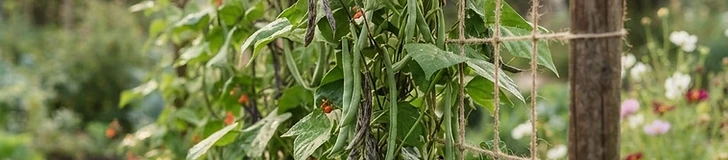
Vertical gardening transforms how you grow by utilizing height instead of limited soil space. Whether you are gardening in USDA zones 3 through 10, Phaseolus vulgaris (pole beans) and Phaseolus coccineus (runner beans) are prolific climbers that thrive when given a sturdy, vertical surface to scale. By using netting or string, you keep pods off the damp soil, reducing rot and making harvesting effortless.
Choosing Your Support Material When deciding between netting or string, consider your garden layout. Plastic or nylon mesh netting is ideal for large patches because it spans wide areas and offers countless attachment points for tendrils. Garden twine or jute string is better suited for individual stake systems, where you run a dedicated line from the base of the plant to an overhead beam.
Setting Up the Trellis Regardless of the material, stability is paramount. Beans become heavy with foliage and water-laden pods as summer progresses.
- Sink two sturdy wooden or metal posts 6 to 8 feet into the ground at either end of your garden bed.
- Secure the netting or run tight horizontal wires between the posts.
- Ensure the structure is anchored well, as summer thunderstorms can exert significant wind pressure on the thick wall of foliage.
Pro tip: If using twine, tie a simple slipknot at the base of your bean seedling and gently wind the stem clockwise around the string; this encourages the plant to grab hold naturally.