

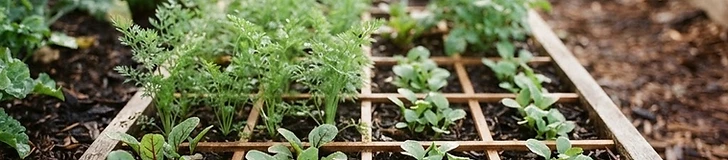
Maximizing your garden footprint starts with understanding how to space root vegetables efficiently. In square-foot gardening, we use the grid to pack in as much produce as possible without sacrificing root development or plant health.
The Logic of Density
Spacing for root vegetables relies on the physical width of the mature crop. Unlike sprawling tomatoes or squash, root crops like Daucus carota (carrots), Beta vulgaris (beets), and Raphanus sativus (radishes) grow vertically, allowing for high-density planting. When you provide just enough room for the edible portion to expand, you inhibit weed growth and retain soil moisture effectively.
Radishes: The Quickest Producers
Radishes are the fastest crop for your grid. Because they mature in as little as 25 to 30 days, you can fit the most plants per square foot.
- Plant 16 radishes per square foot (4 rows of 4).
- Space seeds approximately 3 inches apart.
- These are ideal for succession planting; sow a new square every two weeks to maintain a constant harvest from spring through early autumn.
Tip: When planting small seeds like carrots and radishes, mix them with a pinch of sand to help you see where they land on the soil surface, ensuring more uniform spacing.
Carrots: Thin for Success
Carrots thrive when given 3 inches of space in every direction. While many gardeners struggle with stunted roots, density is usually the culprit. Aim for 16 carrots per square foot. If you are growing heirloom varieties or larger storage types, reduce your density to 9 per square foot to allow for wider shoulder growth.
Beets: Double Duty
Beets require more space than radishes but offer double the yield. Each beet plant provides a bulb and edible greens.
- Plant 9 beets per square foot.
- Ensure they are spaced roughly 4 inches apart.
- Harvest the outer leaves for salads throughout the growing season without pulling the root.
Soil and Temperature Considerations
Root crops grow best in loose, sandy loam. Since you are planting densely, ensure your soil is free of rocks which cause stunted or forked roots. Aim to sow these seeds when soil temperatures reach 50°F to 65°F. In hotter regions, use light shade cloth to prevent the soil surface from crusting, which can impede germination for these shallow-sown seeds.
Consistent moisture and loose soil are the secrets to heavy root yields in a small space.