
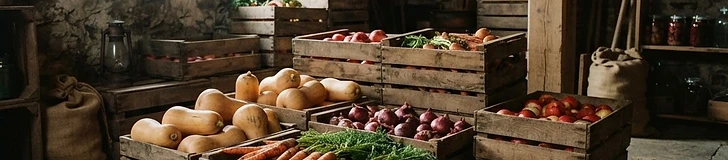
A root cellar keeps late-season crops edible for months using nothing but temperature and humidity. No electricity, no preservatives, no processing — just the right conditions that slow respiration and rot.
If you have a cool basement, an unheated garage, or even a spare closet on an outside wall, you can experiment with cold storage this fall.
The two conditions that matter
- Cold, 32–40°F, with some crops wanting it warmer (50–55°F for winter squash, sweet potatoes).
- Humid, 85–95% for roots that are prone to wilting; 60–70% for the dry-skinned ones.
Cold + humid = roots. Cool + dry = squash, onions, garlic.
What to store where
- Cold & humid (32–40°F, 90%): potatoes, carrots, beets, turnips, parsnips, rutabagas, celeriac, leeks, apples (kept away from roots — ethylene makes roots bitter)
- Cool & dry (50–55°F, 60–70%): winter squash, pumpkins, sweet potatoes, onions, garlic
Prep that matters
- Don't wash roots before storage — brush off soil gently. Water invites rot.
- Cure squash, sweet potatoes, onions, and garlic for 1–2 weeks in a warm, dry spot before storing — this heals cuts, dries the neck, and sets the skin.
- Cut the tops of root vegetables to an inch; leave the roots intact.
- Check weekly. One rotting apple can ruin the bin. Sort out anything soft.
Storage setups you can actually build
- Sand buckets: bury carrots and beets in slightly damp sand in a cool basement — they stay crisp for months
- Crate stations: stack wooden crates where air can move; inspect weekly
- A real cellar: insulated, vented, with shelves at different heights for temperature stratification
Apples and potatoes don't mix. Apples release ethylene, which makes potatoes sprout and gives them a sweet, unpleasant flavor. Keep them at opposite ends.
When in doubt, use the fridge
Most modern homes don't have a true root cellar. A spare refrigerator set to 38°F with a damp towel in the crisper works almost as well for carrots, beets, and leeks — and lets you experiment before committing to building anything.