
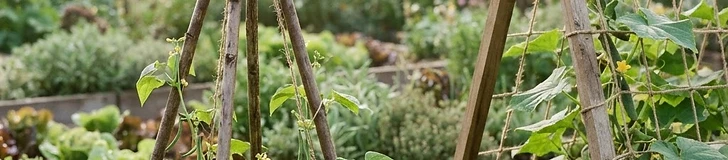
Vertical gardening allows you to grow significantly more food in a limited footprint while improving air circulation for your plants. By building your own structures, you can tailor supports to fit your specific raised beds or in-ground garden plots.
The Teepee Trellis for Compact Spaces The teepee trellis is an ideal solution for smaller beds or container gardens where you want to grow climbing varieties like Phaseolus vulgaris (pole beans) or Pisum sativum (sugar snap peas). To build one, gather four or five sturdy bamboo poles, each 6 to 8 feet long. Lash the tops together tightly with garden twine, creating a pyramid shape. Secure the base of each pole firmly 6 to 8 inches into the soil to ensure the structure withstands high winds.
Constructing a Sturdy A-Frame An A-frame trellis offers maximum structural stability for heavy-fruiting vines like Cucumis sativus (cucumbers) or small varieties of squash. Construct two identical rectangular frames using 2x2 lumber or cattle panels. Connect them at the top with a heavy-duty hinge or zip ties to form an inverted V.
Always angle your trellis facing south to ensure your crops receive at least 6 to 8 hours of direct sunlight, which is crucial for photosynthesis and fruit development.
Choosing Your Materials When selecting materials for your trellis, consider your local climate and USDA hardiness zone. In humid regions where temperatures exceed 85°F, use rot-resistant wood like cedar or coated metal to prevent rapid breakdown.
- Bamboo or wooden stakes: Best for lightweight peas and beans.
- Cattle panels: Ideal for heavy vegetables and multi-season use.
- Nylon netting: A cost-effective temporary solution for annual climbers.