
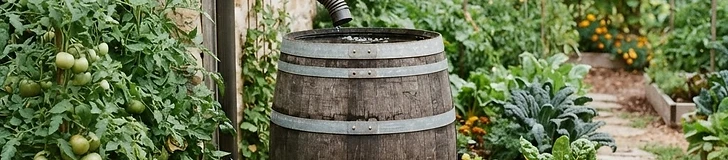
Rainwater is soft, slightly acidic, chlorine-free, and free — exactly what plants want. Catching it from a roof is one of the simplest, highest-impact upgrades to a home garden.
Why plants prefer it
Tap water can be alkaline and chlorinated, which slows soil life (the microbes that feed your plants). Rainwater averages pH 5.6, near-perfect for most vegetables. A tomato watered with rainwater out-performs the same plant on hose water — not by magic, by biology.
How much you can catch
A 1,000 sq ft roof yields roughly 600 gallons per inch of rain. A single 50-gallon barrel fills from a moderate storm on a small roof section. That's a week of deep watering for a typical raised bed, off one downspout.
The beginner setup
- A rain barrel (food-grade, with a lid and fine mesh screen) placed under a downspout.
- A diverter on the downspout that fills the barrel and overflows back to the downspout when full — no floods.
- A hose bib near the bottom for gravity watering. Raise the barrel on blocks for better flow.
The rules
- Use a lid or screen. Standing water breeds mosquitoes and algae; a mesh screen and a tight lid stop both.
- Don't drink it unless you filter and treat. For plants only.
- Empty before winter in cold climates — freezing water cracks a barrel.
- First flush — the first few minutes of rain wash the roof. A simple first-flush diverter dumps the dirtiest water before the barrel starts filling.
Scale up when you're ready
One barrel becomes a row of barrels or a 1,500-gallon tank fed from a greenhouse roof. Run drip irrigation from a raised tank and your beds water themselves whenever it rains — the closest thing to free, automatic irrigation most home gardens can have.