
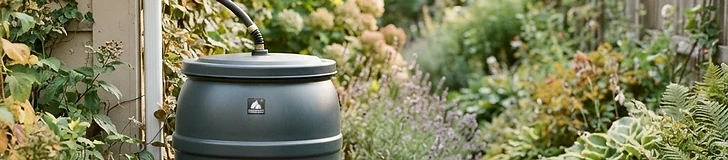
Every inch of rain that falls on a 1,000-square-foot roof delivers roughly 600 gallons of soft, chlorine-free water — free for the catching. For a home gardener, that is enough to carry raised beds and containers through a dry stretch without ever turning on the tap. This guide walks through the basics of catching that water safely and putting it to work.
Why rainwater is worth it
Rainwater is naturally soft and slightly acidic, with no chlorine or treatment chemicals. Plants take it up readily, and it is ideal for seedlings, houseplants, and acid-loving crops like blueberries. It also lowers your water bill during the peak summer months and reduces the runoff that carries soil and fertilizer off your property.
Sizing a single barrel
Start with the math above: roof area (square feet) × 0.62 × inches of rain = gallons collected. A modest 1,000 sq ft roof catches about 31 gallons from a half-inch shower — enough to fill five watering cans. A 55-gallon barrel will overflow quickly in a good storm, so if you can, link two or three barrels together with a short hose between them and let the first fill before the overflow leaves.
Hooking up a downspout
Most home setups divert water from an existing downspout rather than replumbing the gutters. A simple diverter fits into the downspout and sends water sideways into the barrel; once the barrel is full, water flows straight down the downspout as before. This means you never lose your existing drainage path.
- Place the barrel on a sturdy, level stand a foot or two off the ground so gravity gives you decent pressure at the spigot.
- Keep the barrel a few inches below the diverter so water flows downhill into it.
- Use a fine mesh screen at the inlet to keep leaves and roof grit out.
Keeping the water clean
A barrel of water open to the air will grow algae and become a mosquito nursery. Two cheap habits prevent both:
- Cover it. A tight-fitting, opaque lid blocks sunlight (no algae) and keeps mosquitoes out. Fit a fine screen over any overflow hole.
- Empty and rinse the barrel once a season to flush out sediment that settles at the bottom.
If mosquitoes do get in, a quarter-teaspoon of mosquito dunks (Bti) dropped in every month kills larvae without harming plants, pets, or people.
Using the water
A spigot at the base of the barrel lets you fill watering cans directly. For a little more reach, screw on a short hose — gravity, not pressure, does the work, so keep the hose short and downhill. Harvested rainwater is perfect for:
- Hand-watering new transplants and seed trays
- Soaking containers on a hot porch
- Filling a soaker hose laid along a bed (let it trickle, not spray)
Avoid using rain barrel water on leafy greens you eat raw within a week of watering, since roof runoff can carry bird droppings. Reserve it for soil-level watering and for non-edible beds when in doubt.
Practical tips
- Start with one barrel, measure how fast it fills, then decide whether to add a second.
- Disconnect and store barrels over winter in cold climates, or leave the diverter in bypass so ice can't split the plastic.
- If your roof is asphalt shingle, the water is fine for ornamentals and the vegetable garden; avoid it for anything meant for raw consumption.
Quick takeaway
One barrel off a downspout turns every rainstorm into a free, plant-friendly reservoir — set it up right, keep it covered, and let gravity water the garden for you.