
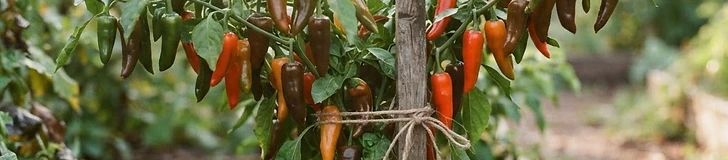
As your pepper plants begin to produce heavy loads of fruit, their branches can become fragile. This guide will help you provide the structural support needed to keep your harvest off the ground and safe from breakage. By acting early in the season, you ensure your plants stay healthy through high temperatures and summer storms.
Why Peppers Need Support While many gardeners consider peppers sturdy, varieties like Capsicum annuum often grow top-heavy once they are loaded with fruit. Strong winds or heavy rain can snap branches weighed down by large bell or heavy roasting peppers. Providing mechanical support keeps the foliage off the soil, which improves airflow and reduces the risk of fungal diseases that thrive in damp, stagnant environments.
Choosing Your Support Method The best time to install supports is immediately after transplanting when the root system is young. If you wait until the plant is full-grown, you risk damaging the roots. Consider these three effective options:
- Individual Stakes: Use a sturdy bamboo or wooden stake driven at least 6 inches deep next to the main stem. Use soft garden twine or velcro tape to loosely secure the stem to the stake.
- Cages: Tomato cages work wonders for peppers. A smaller, lightweight circular cage provides a structure for branches to lean on naturally.
- Trellising: For rows of peppers, run a horizontal wire or strong twine between two heavy-duty fence posts. You can weave the pepper branches between the lines as they grow.
Always tie your peppers with a figure-eight knot, ensuring the stem has room to expand and thicken throughout the season without being constricted.