
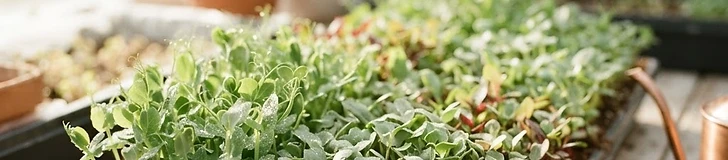
Achieving that perfect, professional-looking tray of microgreens is often less about the seeds you choose and more about how you manage the environment in which they grow. For many home gardeners, the transition from inconsistent, leggy sprouts to dense, vibrant crops depends on balancing three critical variables: light, temperature, and airflow. By fine-tuning these elements within your living space, you can accelerate growth and ensure your harvests are as nutritious as they are beautiful.
The Role of Light in Growth and Flavor
Many beginners assume that microgreens can simply be placed on a sunny windowsill. While possible, natural light is often too inconsistent to produce the uniform growth required for a quality harvest. Most microgreens thrive under full-spectrum LED shop lights. These provide a consistent light intensity that prevents the seedlings from becoming 'leggy'—a condition where the stems grow abnormally long and thin while searching for a light source. Ideally, your lights should be suspended 2 to 4 inches above your trays. If you notice your greens leaning sharply, they are likely hungry for more light or the source is too far away. Aim for 12 to 16 hours of light per day to maintain a steady, robust growth rate.
Temperature Control for Germination and Maturity
Temperature is the silent engine of your microgreen operation. During the initial germination phase, most varieties, such as radish, broccoli, and arugula, prefer a slightly warmer environment, ideally between 68°F and 75°F. Using a seedling heat mat can be a game-changer during colder months, especially if you are growing in a garage or basement where temperatures might dip below 65°F. Once the seeds have germinated and you move the trays into the light, you can slightly lower the ambient temperature. Consistency is key; wild fluctuations can stress the plants and invite pathogens. If your home stays within the standard comfortable range of 70°F, you are likely in the sweet spot for almost all popular varieties.
The Necessity of Airflow and Circulation
Airflow is frequently the most overlooked aspect of indoor gardening. In a closed environment, stagnant air becomes a breeding ground for mold and fungal issues like damping-off disease. You do not need a wind tunnel; rather, you need gentle, constant movement of air across the surface of your trays. A simple oscillating fan placed at a low setting near your grow area will suffice. This airflow serves two purposes: it strengthens the stems of the plants by simulating a natural breeze, and it helps manage surface humidity, ensuring that the moisture on your soil or growing medium evaporates at a healthy rate.
Practical tips
- Always keep your light source at a fixed distance, using adjustable chains to move the lights higher as your greens grow.
- If you live in a particularly humid area, increase your airflow to prevent the development of white fuzz, which is often confused with mold but is actually just root hairs.
- Use a digital thermometer-hygrometer to track local conditions near your trays rather than relying on the general house thermostat.
- Rotate your trays every few days if you are using natural sunlight to compensate for the shifting angle of the sun through your window.
- Avoid overwatering once the plants are established, as high humidity combined with stagnant air is a recipe for crop failure.
Quick takeaway
Consistent light intensity, stable temperatures near 70°F, and gentle air circulation are the fundamental pillars for successful, fast-growing microgreens.