
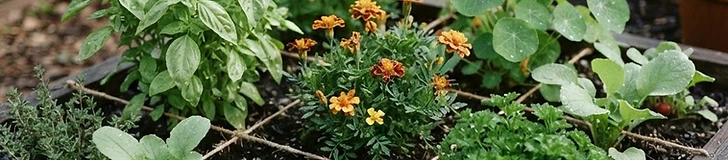
Maximizing a small space requires strategic plant placement. By combining compatible species within a single 12-by-12-inch grid, you can improve soil health, naturally deter pests, and increase your total yield throughout the USDA growing zones.
The Tomato and Basil Powerhouse For a single square foot, place one determinate tomato plant in the center and tuck four Ocimum basilicum (basil) seedlings around the perimeter. The basil acts as a living mulch, retaining soil moisture and potentially improving the flavor of the fruit. This pair thrives in full sun once soil temperatures stay consistently above 60°F.
Lettuce and Chives Synergy Pair low-growing lettuce with upright Allium schoenoprasum (chives) to maximize vertical and horizontal space. Plant one cluster of chives in a corner square and fill the remaining space with four loose-leaf lettuce plants. The chives act as a natural pest deterrent for aphids, while the lettuce enjoys the slight shade provided by the taller chive stalks during the heat of late spring.
Always ensure your companion plants have similar water and light requirements to avoid one species outcompeting the other for essential nutrients.
Marigolds and Peppers If you are struggling with nematodes or common garden pests, combine one bell pepper plant with two Tagetes (marigold) starts. The marigolds emit a scent that masks the pepper plant from hungry insects. This combo works best in mid-season, as peppers require warm soil (at least 65°F) to thrive, while the marigolds provide continuous color until the first frost.
Radishes and Carrots Root vegetables like carrots and radishes are perfect for high-density planting. In one square foot, you can fit up to 16 carrots. Interplant them with 4 to 8 radishes, which germinate quickly.
- Sow radish seeds alongside slower-growing carrots.
- Harvest the radishes within 25–30 days to clear space for the carrots to mature.
- Ensure the soil is loose and rock-free to allow both root crops to develop straight, healthy taproots. By selecting companions with different root depths and growth habits, you can transform every square foot of your garden into a highly productive micro-ecosystem.