
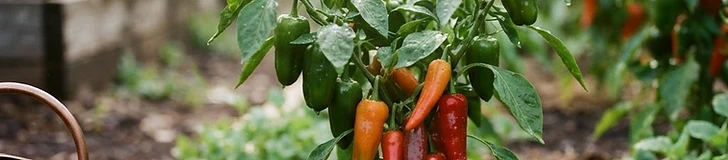
Keeping your pepper plants, such as Capsicum annuum, properly hydrated and fed during the peak of summer is the secret to moving from a few individual peppers to a heavy, continuous harvest. By adjusting your routine once flowers begin to set fruit, you can prevent common issues like blossom end rot and stunted growth.
Consistent Moisture
Proper irrigation is essential because peppers are highly sensitive to fluctuating soil moisture. During the heat of summer, when temperatures consistently climb above 85°F, aim for about 1 to 1.5 inches of water per week.
- Use a moisture meter or your finger to check soil 2 inches deep.
- Water at the base of the plant to keep foliage dry, which reduces fungal risks.
- Avoid 'drought-stress-drench' cycles, which cause peppers to drop blossoms.
Targeted Nutrition
As plants transition from vegetative growth to fruiting, their nutrient needs shift. Nitrogen was great for early green growth, but excess nitrogen now will only give you bushy plants with few peppers.
- Switch to a fertilizer labeled for vegetables with a higher ratio of phosphorus and potassium (the middle and last numbers on the bag).
- Apply a liquid organic feed every 2 to 3 weeks during the height of the season.
- Avoid heavy granular fertilizers right against the stem; work them into the soil a few inches away.
Tip: Adding a 2-inch layer of organic straw or shredded leaf mulch around the base of your plants helps retain soil moisture and stabilizes temperature, preventing the rapid drying that leads to blossom drop.
Managing Soil Health
Maintaining healthy soil biology ensures that the nutrients you add are actually available to the plant roots. If you are gardening in USDA Zones 5-9, the intense mid-summer heat can bake the soil surface, killing beneficial microbes.
- Keep the root zone cool with mulch.
- Water early in the morning to allow for maximum absorption before the midday heat hits.
- If your soil is heavy clay, ensure you have amended it with compost to prevent the water-logging that peppers despise.
By staying proactive with these simple adjustments, your pepper patch will remain productive right up until the first frost of autumn.