
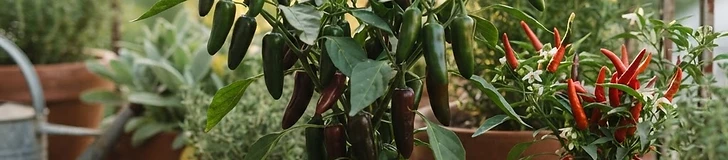
You don't need a sprawling backyard to grow a bounty of spicy chiles. Peppers thrive in containers, making them perfect candidates for sunny balconies, decks, or small patio spaces regardless of your USDA zone.
Selecting Your Containers
Choose the right pot size to ensure your plants have room to grow. For smaller varieties like Capsicum frutescens or compact Thai chiles, a 3-gallon pot is sufficient. Larger, bell-type peppers or prolific jalapeños perform better in 5-gallon containers. Regardless of size, every pot must have drainage holes at the bottom; peppers hate 'wet feet' and will succumb to root rot if they sit in standing water.
Soil and Nutrients
Potting soil is superior to garden soil for containers because it provides the necessary aeration and drainage. Use a high-quality potting mix containing peat moss or coconut coir and perlite. Because container nutrients leach out during watering, use a balanced, water-soluble fertilizer once every two weeks once the plant starts flowering to keep production high.
Keep your peppers in the 'sweet spot' of 70°F to 85°F; if temperatures consistently dip below 60°F or soar above 95°F, your plant may drop its blossoms.
Sun and Hydration
Peppers are true sun-lovers that require at least 6 to 8 hours of direct sunlight daily. In hot climates, afternoon shade can prevent heat stress, but in cooler zones, maximize sun exposure to reach peak heat levels in your chiles. Water whenever the top 1–2 inches of soil feels dry to the touch, and be prepared to water daily during the peak of summer, as containers dry out much faster than garden beds.
Support and Maintenance
Even dwarf pepper varieties can become top-heavy when loaded with fruit. Use a small bamboo stake or a tomato cage to provide structural support early in the season. This prevents branches from snapping under the weight of a heavy harvest and improves airflow, which helps keep fungal issues at bay.
Container gardening allows you to move your plants to follow the sun or bring them indoors if an unexpected late-spring frost threatens your seedlings.