
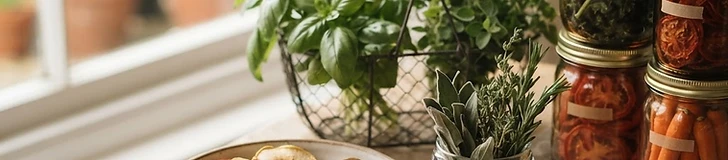
Preserving your garden harvest doesn't always require heavy canning equipment. Dehydration is a gentle, space-saving method that intensifies flavors and locks in nutrients, turning excess produce into shelf-stable ingredients for your winter kitchen. In this guide, you will learn how to dry herbs, fruits, and vegetables safely at home.
Preparing Your Produce Success begins with quality. Select fresh, firm items at their peak maturity.
- Wash and dry everything thoroughly to remove garden soil.
- Remove bruised or discolored portions; if it is not good enough to eat fresh, it is not good enough to dry.
- Slice items uniformly—about 1/8 to 1/4 inch thick—to ensure they dry at the same rate.
The Drying Process Most home dehydrators operate between 95°F and 150°F. For herbs like Ocimum basilicum (basil), use the lower end of the range to preserve essential oils. For fruits and vegetables, aim for 125°F to 135°F.
Always leave space between your food pieces on the trays to allow hot air to circulate freely; crowding leads to uneven drying and potential mold growth.
Signs of Readiness How do you know when the job is done? Testing for moisture content is essential for safety.
- Herbs: Should crumble easily between your fingers when fully dry.
- Vegetables: Should feel brittle or leathery with no visible moisture.
- Fruits: Should be pliable and leathery; if you squeeze a piece and see beads of moisture, continue drying.