
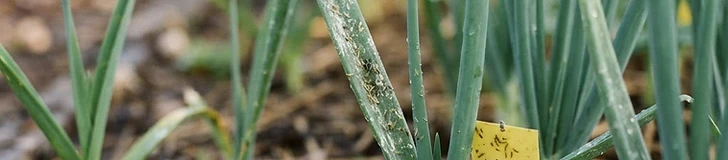
Onion thrips are common, tiny pests that can cause significant damage to your onion and garlic crops. This guide will help you identify their presence early and implement organic control methods to protect your harvest.
Identifying the Signs of Infestation
Onion thrips (Thrips tabaci) are pale, slender insects that thrive in hot, dry weather, typically once temperatures rise above 75°F. Because they are less than 1/16 of an inch long, they are hard to see with the naked eye. Instead of looking for the bugs, monitor your plants for the damage they cause. Watch for:
- Silvery or white streaks on the leaves
- Twisted or crinkled leaf tips
- A general dusty or grayish appearance on the foliage
Monitoring Techniques
To catch these pests before they overwhelm your garden, you must use consistent monitoring tactics. These insects hide deep in the leaf folds where the leaves meet the neck of the bulb. To check for them, pull back the leaves near the center of the plant. You can also place sticky yellow cards near your rows; if the thrips are present, they will be drawn to the bright color and get stuck, confirming the need for action.
Pro Tip: Always rotate your onion and garlic beds annually to prevent thrips from overwintering in soil debris near their favorite host plants.
Organic Control Strategies
If you confirm an infestation, rely on these integrated management practices to stop the spread:
- High-pressure water: Use a sharp spray of water to knock the nymphs off the leaves in the early morning.
- Neem oil: Apply organic neem oil sprays, ensuring you coat the inside of the leaf axils where the pests cluster.
- Beneficial insects: Encourage predators like ladybugs, lacewings, and minute pirate bugs, which feed on thrips throughout the summer.
- Garden cleanup: At the end of the season, remove and compost or dispose of all allium crop residues rather than leaving them in the garden bed.
Maintaining Plant Health
Healthy plants are less susceptible to severe outbreaks. Ensure your alliums are well-watered, as water-stressed plants are significantly more attractive to thrips. Mulching with straw or pine needles can also help maintain soil moisture and keep foliage drier, creating a less hospitable environment for these tiny intruders. By staying proactive, you can keep your garden thriving all year long.