
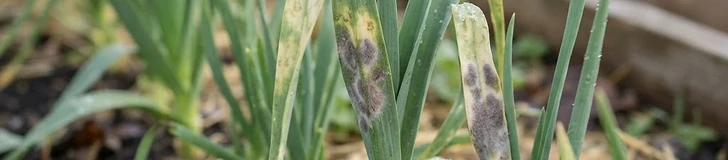
Downy mildew is a persistent fungal disease caused by the pathogen Peronospora destructor that thrives in cool, humid conditions. This guide will help you spot the symptoms early and keep your onion patches healthy throughout the growing season.
Identifying the Symptoms
The first sign of downy mildew usually appears during cool, wet springs or early summers when temperatures hover between 50°F and 70°F. Look for pale green or yellow, oval-shaped spots on the older leaves. As the infection progresses, you may notice:
- A fuzzy, violet-gray fungal growth appearing on the surface of the lesions during damp mornings.
- Leaves eventually turning yellow, collapsing, and shriveling from the tips downward.
- Secondary soft rot infections taking hold of the weakened plant tissue.
Cultural Prevention Strategies
Because this pathogen persists in the soil and on crop debris, prevention is your best defense. In USDA zones 3 through 9, focus on these practices:
- Increase airflow by ensuring proper spacing; plant onions at least 4 to 6 inches apart to allow foliage to dry quickly after rain or dew.
- Practice a 3-year crop rotation; avoid planting onions, garlic, or leeks in the same spot where alliums grew previously.
- Water at the base of the plant only, using drip irrigation or a soaker hose to keep the leaves bone-dry.
Always remove and discard infected plant material in the trash rather than the compost pile, as standard home composting temperatures often fail to kill the fungal spores.
Managing Fungal Spread
If you spot localized infection, swift action can save the remainder of your bed. Sanitation is critical to stop the spread of spores. Remove severely affected leaves immediately, placing them directly into a sealed bag. Ensure you clean your pruning shears with a solution of 10% bleach or rubbing alcohol between cuts to prevent mechanical transmission.
Choosing Resistant Varieties
While no onion is completely immune, selecting varieties bred for disease resistance can significantly improve your odds. Look for hybrid varieties labeled as having high tolerance to downy mildew. Planting in well-draining soil and utilizing raised beds can also help manage excess moisture, making your garden a less hospitable environment for fungal development. By staying vigilant during wet spells, you can prevent mildew from taking hold and enjoy a successful, bulbous harvest.