
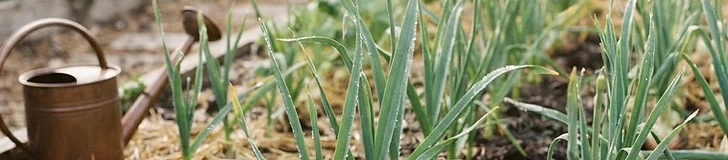
Keeping your garlic and onions healthy throughout the growing season requires consistent attention to their basic needs. By managing moisture, nutrition, and competition, you set your alliums up for a robust harvest.
Consistent Watering
Proper hydration is vital for bulb development. Alliums have relatively shallow roots and require about 1 inch of water per week, especially during the spring bulb-swelling phase. In USDA zones 5 through 8, ensure your soil stays moist but not waterlogged. If the top 2 inches of soil feel dry to the touch, it is time to irrigate. Reduce watering once the leaves begin to yellow in late spring or summer to prevent bulb rot.
Smart Feeding
Alliums are heavy feeders that benefit from a balanced diet during their vegetative growth stage. Use a nitrogen-rich organic fertilizer early in the season to encourage leafy growth, which is necessary for large bulb production. Avoid adding high-nitrogen fertilizers once temperatures consistently exceed 75°F or as the bulbs begin to form, as this can encourage rot and inhibit maturation.
Tip: Apply a layer of organic mulch like straw or shredded leaves around your plants to retain moisture, suppress weeds, and regulate soil temperature.
Strategic Weeding
Because Allium species such as Allium sativum (garlic) and Allium cepa (onion) have thin, upright foliage, they are poor at shading out competitors. Weeding is essential because these crops are easily stunted by invasive grasses and broadleaf plants that steal sunlight and nutrients.
- Hand-pull weeds gently to avoid disturbing the shallow allium roots.
- Use a hula hoe or stirrup hoe for larger garden beds, keeping the blade shallow to prevent damage to the bulbs.
- Weed early in the morning when the soil is cool to minimize moisture loss.
Monitoring Growth
Regular observation helps you catch potential issues early. Keep an eye out for yellowing tips or distorted leaves, which can signal pest pressure or nutrient deficiencies. Maintaining clean, weed-free soil not only promotes airflow—reducing the risk of fungal diseases—but also makes it easier to spot these changes before they impact your yield. Consistency in these three areas will lead to the most flavorful, well-developed bulbs come harvest time.