
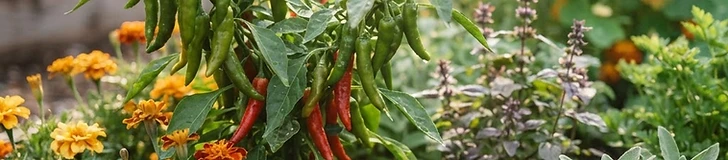
Maximizing your pepper harvest starts long before you reach for the fertilizer. By selecting the right neighbors for your Capsicum annuum plants, you can naturally deter pests, improve soil health, and even boost the flavor of your produce throughout the growing season. This guide covers the essential companions to help your peppers thrive from USDA zones 3 to 11.
The Power of Herbs
Aromatic herbs act as the first line of defense in the garden. Plants like Basil are perhaps the best companion for peppers; they improve growth and flavor while masking the scent of the peppers from hungry insects. Additionally, planting Cilantro or Dill nearby can attract beneficial hoverflies and parasitic wasps that prey on aphids, a common pepper pest.
Alliums for Pest Control
Members of the allium family, such as chives and onions, are powerful allies. Their strong scent acts as a natural repellent for aphids, Japanese beetles, and even rabbits that might be tempted to nibble on your tender seedlings. Plant these in the gaps between your pepper plants, ensuring they remain at least 6 to 12 inches away from the main stems to avoid nutrient competition.
For the best results, stagger your plantings so that your herbs and alliums are well-established by the time you transplant your peppers into the garden once soil temperatures reach a consistent 65°F.
Beneficial Flowers
Including flowering companions like Marigolds and Nasturtiums serves a dual purpose. Marigolds are famous for secreting substances in the soil that can deter harmful nematodes, while their bright blooms act as a magnet for pollinators. Nasturtiums serve as a 'trap crop,' drawing aphids away from your peppers and toward the flowers, where they are easier to manage or simply sacrifice for the greater good of the crop.
Plants to Avoid
While companion planting is beneficial, some neighbors should be kept at a distance. Avoid planting members of the Brassica family, such as kale or broccoli, too close to your peppers, as they often compete for the same soil nutrients and may attract overlapping pest populations that can overwhelm your garden bed in a single week.
By carefully selecting these companions, you create a self-sustaining ecosystem that keeps your pepper plants healthy and productive all season long.