
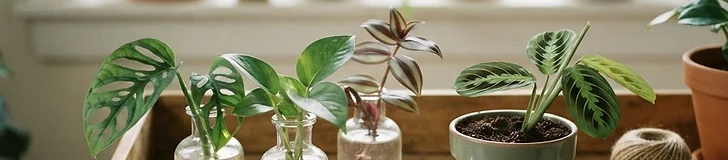
Expanding your indoor jungle doesn't require a trip to the nursery. By learning two foundational techniques—stem cuttings and division—you can create new plants from the ones you already own, saving money while gaining confidence as a gardener.
Propagating via Stem Cuttings
Many popular houseplants, such as Epipremnum aureum (Pothos) and Philodendron, propagate easily through stem cuttings. This method uses a segment of the parent plant to grow new roots. Choose a healthy stem and snip a 4-to-6-inch section just below a node—the small bump where leaves emerge. Remove the lower leaves so that only the top two remain, then place the cutting in a clear glass of room-temperature water. Keep it in bright, indirect light at temperatures between 65°F and 75°F. Change the water weekly and transplant to soil once roots reach 2 inches in length.
The Division Method
For clumping plants like Spathiphyllum (Peace Lily) or Sansevieria (Snake Plant), division is the most effective approach. This process involves physically separating a mature plant into smaller, independent sections.
- Gently remove the plant from its container.
- Carefully tease the root ball apart with your fingers, ensuring each new section has both foliage and a healthy root system.
- Repot these divisions into fresh, well-draining potting mix in appropriately sized pots.
Pro Tip: Always use sterilized shears wiped down with isopropyl alcohol before making cuts to prevent the spread of bacteria or fungi to your sensitive parent plants.
Providing Optimal Aftercare
Newly propagated plants are fragile and require consistent moisture as they adjust to their new environment. Avoid direct sunlight, which can scorch tender new growth. Maintain high humidity by lightly misting the foliage or placing the container on a tray filled with pebbles and water. If you notice yellowing leaves, ensure your drainage is adequate, as new roots can rot quickly in soggy soil. Within a few weeks, you should notice new active growth, signaling that your plant is successfully established.
With a little patience and the right tools, you will soon have a thriving indoor garden populated entirely by your own successful propagation projects.