
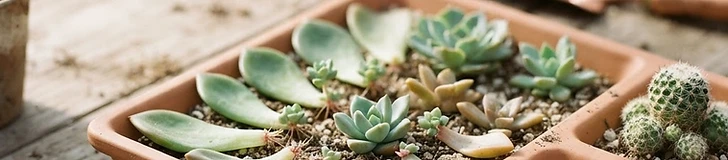
Multiplying your collection is one of the most rewarding aspects of gardening. By using simple techniques, you can grow new plants from the leaves and offsets of your favorite succulents, effectively cloning them for free.
Selecting Healthy Material
For leaf propagation, choose a plump, healthy leaf near the base of the plant. Gently wiggle it side-to-side until it snaps off cleanly; the entire base of the leaf must be intact. For offsets—often called 'pups' on varieties like Echeveria or Aloe—wait until they are at least one inch in diameter. Using a sterile knife, gently detach the pup from the mother plant, ensuring you include a small portion of the connecting root system if possible.
Preparing Your Cuttings
Succulents are prone to rot if planted while 'wet.' Place your harvested leaves or offsets on a dry paper towel in a spot with bright, indirect light for 2 to 3 days. This allows the wound to callous over, creating a protective seal that prevents soil-borne bacteria from entering the plant. Once a dry, puckered scab forms on the end, your cuttings are ready for their new home.
Always use a well-draining cactus and succulent potting mix; standard potting soil retains too much moisture and will likely cause your new, fragile cuttings to rot before they can root.
Planting and Rooting
Lay your calloused leaves flat on top of slightly moist succulent soil. For offsets, plant the base shallowly into the soil, just deep enough to keep the pup upright. Place the container in a warm area—ideally between 70°F and 80°F—with bright, indirect light.
Maintaining Growth
Success requires patience and specific moisture levels.
- Lightly mist the soil surface once the top layer becomes bone dry.
- Avoid heavy watering, which can drown the undeveloped root systems.
- Once roots appear, you will see a tiny 'baby' plant forming at the base of the leaf.
- After the mother leaf eventually shrivels and dies, it has provided all the nutrients it can; gently remove it and pot your new succulent independently.
With just a little patience and the right environment, you will have a thriving nursery of new plants to share or expand your own indoor garden.