
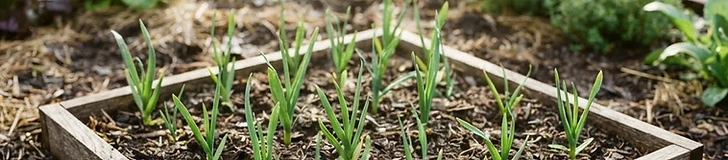
Achieving a bountiful harvest in a small space requires precision. By utilizing a grid system, you can maximize your garden's output of Allium family crops, ensuring each bulb has the exact root zone it needs to swell to its full potential.
The Grid Strategy
To master high-density planting, you must first understand the square-foot capacity for bulb crops. Unlike sprawling vegetables, these plants have a vertical growth habit, allowing you to fit several in a single 12-inch by 12-inch grid square. For standard bulb onions, you can comfortably fit 9 plants per square, spacing them roughly 4 inches apart in a grid pattern. Garlic, whether hardneck or softneck, is slightly more space-demanding; aim for 9 to 16 cloves per square depending on your desired bulb size.
Planting Depth and Timing
Soil preparation is vital for consistent bulb development. Ensure your garden soil is loose, well-draining, and rich in organic matter. Plant garlic cloves root-side down in the fall, about 2 to 4 inches deep, once soil temperatures drop below 60°F. For onions, transplant starts in early spring as soon as the soil is workable, planting them just deep enough to cover the roots without burying the stem base.
For larger bulbs, lean toward the lower end of the density spectrum; giving each plant an extra inch of breathing room significantly increases the final bulb weight at harvest time.
Managing Soil Moisture
Proper irrigation management prevents rot and promotes storage quality. During the initial growth phase, keep the soil consistently moist but never waterlogged. As the foliage begins to yellow and the bulbs reach maturity, gradually reduce watering to encourage curing.
- Maintain a clean grid by pulling weeds early to prevent competition for nutrients.
- Apply a thin layer of organic mulch to keep the soil temperature stable.
- Stop all supplemental irrigation two weeks before you plan to harvest.
Troubleshooting Crowding
If your plants look stunted, you may be exceeding your square's limit. Proper spacing ensures adequate airflow, which is the best defense against fungal pathogens and bulb rot. If leaves begin to touch excessively early in the season, thin the plants to improve light penetration.
With these spacing techniques, your square-foot garden will produce professional-grade bulbs all season long.