

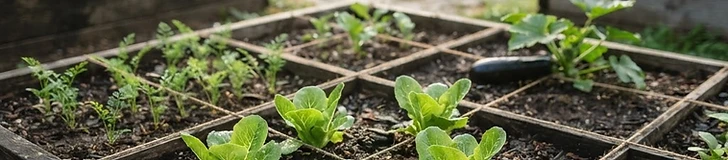
In square-foot gardening, the goal is to pack the maximum number of plants into every square foot of your raised bed without causing overcrowding. By grouping crops by their mature size rather than traditional row spacing, you can significantly increase your yields while minimizing the space available for weeds to grow.
The 1-per-Square Standard
Many large vegetables require a full square foot to develop properly. This space is essential for root depth and foliage breathability.
- Large Crops: Tomatoes (determinate varieties), peppers, broccoli, and cabbage need one square foot per plant.
- Spacing Tip: If you live in zones 5-9, ensure you plant these on the north side of your bed so they do not shade out smaller neighbors as they grow taller.
High-Density Small Crops
Smaller vegetables and greens can be grouped to turn a single square foot into a miniature production hub.
- 4 per Square: Lettuce and chard thrive when spaced in a grid of four per square.
- 9 per Square: Bush beans and spinach work well in a 3x3 pattern.
- 16 per Square: Carrots and radishes are the stars of high-density planting. Because they grow straight down, they only need about 3 inches of space between them to reach maturity.
Always account for your local climate; if your summer temperatures consistently exceed 85°F, lean toward the lower end of density recommendations to prevent stress and ensure better airflow during heat waves.
Root vs. Leaf Considerations
Understanding the growth habit is key to successful density. Root crops need consistent moisture to avoid splitting, while leafy greens benefit from the light shade provided by their neighbors. When planning your layout, avoid putting fast-growing crops like radishes directly underneath slow-maturing cabbage, as the cabbage will eventually crowd them out before they reach harvest size.
Vertical Potential
Do not forget that vertical space counts as part of your footprint. Vining crops like pole beans or cucumbers can be planted at a rate of four per square foot if you provide a sturdy trellis. By training these plants upward, you save ground space for low-growing herbs or flowers, allowing you to produce double the amount of food in the same physical area.
Start your planning today by sketching your grid on paper, assigning your desired varieties to squares based on these spacing rules, and watching your productivity soar.