
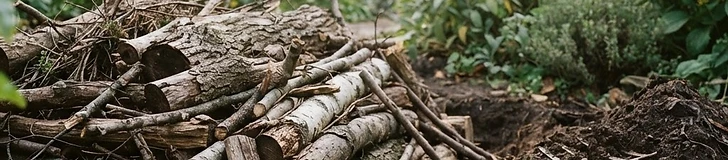
Creating a successful hugelkultur mound starts with its foundation. By burying logs and branches, you create a self-watering sponge that sustains your garden through the heat of summer. This guide explains how to select the right wood and stack it effectively for lasting results in any USDA zone.
Selecting Your Woody Materials
The woody core acts as a slow-release nutrient source. For best results, use hardwood species like Quercus (oak) or Acer (maple). Avoid rot-resistant woods like Juniperus (cedar) or Juglans nigra (black walnut), which contains juglone, a chemical that can inhibit growth in many vegetables. Soft, decaying wood is ideal because it begins the breakdown process immediately, allowing roots to penetrate the core sooner.
Proper Layering Technique
Start by clearing a trench 6–12 inches deep to ensure the base is in direct contact with the native soil. This connection allows beneficial fungi and earthworms to colonize your bed from below.
- Place the largest logs at the bottom.
- Layer medium-sized branches on top to fill gaps.
- Add a final layer of twigs and wood chips to create a dense base.
- Fill the crevices with organic matter like compost or dried leaves.
Pro Tip: Always soak your logs in water for 24 hours before stacking if your region is experiencing a dry spell or you are building in late summer, as this jumpstarts the moisture-wicking capacity of the wood.
Managing Mound Shape
Shape your mound architecture to prevent erosion. A steep, narrow mound is prone to drying out and losing soil during heavy rain. Aim for a gentle slope with a width-to-height ratio of 2:
- If you live in USDA zones 3–6, a slightly higher mound can help catch early spring sun, warming the soil a few degrees faster than flat ground.
Final Stabilization
Once the wood is stacked, cover the entire structure with at least 4–6 inches of soil or finished compost. This layer prevents the woody core from wicking away too much moisture from the surface too quickly. Plant your seedlings directly into this top layer, keeping them well-mulched until the internal biological processes stabilize.
By carefully selecting your materials and creating a stable, well-covered base, you will ensure your garden bed thrives for years to come.