
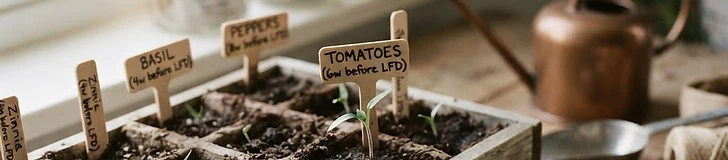
Timing is everything in the world of gardening. Every seed has a specific schedule it prefers, and trying to force that schedule can lead to leggy, weak plants or complete failure. For the home gardener, the most important date on the calendar is the average last frost date in your area. This single data point serves as the anchor for your entire spring planting timeline, dictating when you should start seeds indoors and when it is finally safe to move those plants into the soil. By working backward from this date, you can ensure your seedlings reach the perfect size and maturity for transplanting at the exact moment the weather becomes hospitable.
Understanding Your Last Frost Date
The last frost date is the average date in spring when the temperature is no longer expected to dip below 32°F. It is important to note that this is an average, not a guarantee. Weather can be fickle, and a freak cold snap can occur even after your predicted date. You can find your specific date by checking the USDA Plant Hardiness Zone maps or local extension service websites. Once you have identified this date, it becomes your base reference point for all your seed-starting calculations.
Working Backwards to Start Seeds
Most seed packets include instructions that say something like 'start 6-8 weeks before the last frost.' This is your golden rule. Different vegetables have different requirements; tomatoes and peppers are slow starters that need a head start indoors, while fast-growing crops like radishes or lettuce are usually better suited for direct sowing outside. By mapping out your sowing dates on a physical calendar, you create a personalized roadmap. For example, if your last frost date is May 1st, counting back eight weeks tells you to begin your pepper seeds in early March. This prevents the common problem of seedlings becoming root-bound or overgrown because they were started too early, or conversely, having them be too small to survive the outdoor elements because they were started too late.
The Role of Seedling Maturity
Not all plants transition to the garden at the same stage. Tomatoes, peppers, and eggplants enjoy a long growing season and benefit from being 6-8 weeks old before moving out. Crops like brassicas—such as broccoli and cabbage—prefer cooler weather and can be started 4-6 weeks before your last frost. If you start these warm-season crops too early, they may become 'leggy' as they stretch toward the light, or they may become so large that they suffer significant transplant shock when moved. Aiming for a healthy, compact plant with two sets of true leaves is usually the ideal stage for transplanting.
Factoring in Your Microclimate
Even within the same zip code, gardens differ. A garden tucked against a south-facing brick wall will warm up much faster than a shaded area in a low-lying valley. Your local last frost date is just the starting point; you must also observe your own yard. If you notice frost lingering in your garden beds longer than the forecast suggests, adjust your transplanting dates accordingly. Experienced gardeners keep a simple journal of these observations, noting when the soil finally feels warm to the touch and when the buds on local trees start to break, as these are often more reliable indicators than a calendar alone.
Practical Tips
- Find your specific USDA zone and last frost date using the Dovi app or a local cooperative extension office.
- Always write the 'start date' and 'transplant date' on your seed packets or in a garden planner.
- If a spring turns out to be unseasonably cold, delay your transplanting by a week even if your calendar suggests it is time.
- Invest in a simple light setup; even the best timing won't matter if your seedlings don't have enough light to grow sturdy stems.
- Don't rush the process; it is better to plant a slightly smaller, healthy seedling than a stressed, overgrown one that has outgrown its pot.