
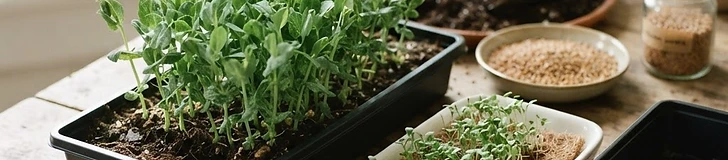
Growing microgreens at home is one of the most rewarding ways to produce nutrient-dense food in a small space. Unlike traditional gardening that spans months, microgreens offer a rapid turnaround, often moving from seed to harvest in just seven to fourteen days. Because these greens are harvested at the cotyledon stage, they pack an intense flavor punch and a high concentration of vitamins. To move from casual experimenter to a productive home grower, you need to master the trifecta of success: selecting appropriate trays, finding the right growing media, and choosing high-quality seeds. ## The Foundation: Choosing the Right Trays For the home gardener, tray selection is less about commercial scale and more about drainage and moisture management. You should generally avoid deep nursery flats, which require far more growing medium than these shallow-rooted plants actually need. Instead, look for standard ten-by-twenty-inch shallow trays, often referred to as flat trays. Ideally, you should use a two-part system: one tray with drainage holes and one tray without. The tray with holes allows for essential bottom watering, while the solid tray beneath catches excess moisture and protects your kitchen counter or grow shelf. For smaller setups, even sturdy plastic food containers with carefully drilled holes can suffice, provided they are food-grade and easy to clean. ## Selecting Your Growing Media The growing medium serves as the anchor for your plants and a reservoir for moisture. While you can use specialized soil, many home gardeners find success with coco coir. Coco coir is a byproduct of the coconut industry that is lightweight, holds moisture exceptionally well, and is generally free of soil-borne pathogens. It is often sold as compressed bricks that expand significantly when hydrated, making it easy to store in a small apartment or suburban shed. If you prefer using soil-based mixes, ensure you select an organic potting mix that has been finely screened to remove large chunks of bark or perlite, as these can interfere with the development of the tiny, delicate roots of your microgreens. Avoid heavy garden soil, which can compact and harbor pests. ## Sourcing High-Quality Seeds When it comes to seeds, quality is non-negotiable. It is tempting to buy bulk vegetable seeds meant for field planting, but these are often treated with fungicides or pesticides that are not safe for microgreen consumption. Always source seeds labeled specifically for sprouting or microgreen production. These are untreated and have been tested for high germination rates. For beginners, start with easy-to-grow varieties like radish, sunflower, and broccoli. Radish microgreens germinate rapidly and provide a spicy kick, while sunflowers provide a satisfying, nutty crunch and a more substantial harvest volume. Broccoli is the gold standard for health benefits and offers a mild, pleasant flavor that pairs well with almost any dish. Always store your seeds in a cool, dark, and dry environment to maintain their viability over time. ## Managing the Micro-Environment To achieve a high yield, you must pay attention to the environment surrounding your trays. Microgreens thrive in temperatures between 65°F and 75°F. If your home is colder, you might notice slower growth, while temperatures consistently above 80°F can encourage mold growth and wilting. Airflow is equally critical. Stagnant air is the primary cause of dampening-off, a fungal issue that kills seedlings. A simple oscillating fan placed in the room—not blowing directly on the plants, but moving air through the space—will significantly improve your success rate. ## Practical Tips - Pre-soak large seeds like sunflower or pea for eight to twelve hours in cool water to jumpstart germination. - Use a spray bottle to mist the seeds twice daily during the germination blackout phase to keep the surface moist. - Keep your trays in a dark space for the first two to four days to encourage tall, straight stems before exposing them to light. - Harvest with sharp scissors just above the soil line to ensure a clean cut and keep your crop free of dirt. - Sanitize your trays between every harvest with a mild vinegar solution to prevent the buildup of pathogens. - Always use a light touch when spreading seeds; overcrowding leads to poor air circulation and mold risk. ## Quick takeaway - Use shallow trays, organic coco coir, and dedicated food-grade seeds combined with consistent air circulation for a reliable and productive microgreen harvest.
 Microgreens
Mastering Microgreens: A Home Grower’s Guide to Trays, Media, and Seeds
4 min read 719 words
Learn how to select the right equipment and materials to grow consistent, healthy, and productive microgreens in any home environment.
#microgreens#indoor gardening#growing media#seeds#home gardening