
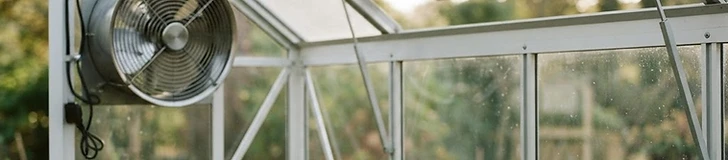
Effective greenhouse management goes beyond just watering and soil health. Proper ventilation is the key to preventing heat stress and humidity-related diseases, allowing your plants to thrive even when temperatures climb during the summer months. In this guide, you will learn how to balance airflow to keep your garden productive.
Understanding Heat Stress Plants in a greenhouse can quickly overheat when internal temperatures exceed 85°F to 90°F. When air becomes stagnant, moisture builds up, creating a breeding ground for fungal pathogens like powdery mildew. Proper ventilation allows hot air to escape through the roof while drawing in cooler air from the base, regulating the microclimate for your seedlings and crops.
The Role of Vents and Fans A well-designed system relies on two main components:
- Roof Vents: Heat rises naturally, so placing vents at the highest point of your greenhouse is essential for passive cooling.
- Circulation Fans: These keep the air moving within the space, which strengthens stems and ensures even temperature distribution.
Pro Tip: Use an automatic wax-based vent opener to adjust roof panels without electricity; they expand as it warms up to open your vents precisely when your plants need air the most.
Managing Airflow Strategies To maintain an optimal environment, follow these practical steps:
- Install a thermometer at plant level to monitor temperatures accurately.
- Position base vents on the side opposite of your roof vents to create a cross-breeze.
- If you garden in USDA zones 7 or higher, consider installing shade cloth during peak summer months to reduce heat gain by 30-50%.
- Ensure your greenhouse is at least 6 feet high at the eaves to provide enough air volume for temperature stability.