
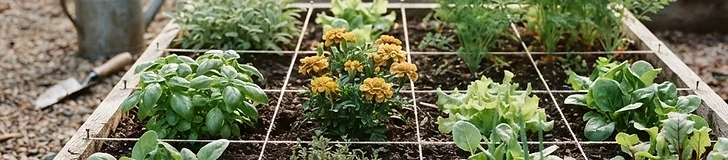
Creating a successful garden grid allows you to maximize your harvest in limited space by assigning specific plant counts to every 12-inch by 12-inch square. This article explains how to map your layout to ensure every plant has enough room to thrive without wasting soil surface area.
The Grid Concept
Using a grid system prevents the common beginner mistake of overcrowding or spacing plants too far apart. By dividing your raised bed into one-foot squares using string or wood lath, you create a clear visual guide. Each square acts as a self-contained environment. For example, large crops like Solanum lycopersicum (tomato) require a full square, while smaller crops like Raphanus sativus (radish) can fit sixteen to a single square.
Understanding Spacing Densities
To plan your layout, categorize your vegetables by their mature size. Refer to these standard square-foot densities when drawing your map:
- 1 plant per square: Large vegetables like Brassica oleracea (cabbage) or peppers.
- 4 plants per square: Medium crops like Phaseolus vulgaris (bush beans) or lettuce.
- 9 plants per square: Small crops like Spinacia oleracea (spinach) or beets.
- 16 plants per square: Tiny crops like radishes or carrots.
Pro tip: Always draw your garden map on paper before heading outside, placing taller plants on the north side of your bed to avoid shading out your smaller, sun-loving crops.
Strategic Layout Planning
Consider the sun requirements and growth habits of your chosen varieties. USDA zone dictates when to plant, but your grid layout dictates how well those plants grow together. Place climbing varieties, such as Pisum sativum (peas), along the northern edge of the bed with a vertical trellis. This prevents them from casting shadows over low-growing greens located in the center of the bed.
Seasonal Adjustments
Remember that your grid is a flexible blueprint. As you harvest a square of radishes, that space immediately becomes available for a new succession planting. If you are gardening in zones 5-7, utilize these mid-season gaps to replant warm-weather crops as soon as the soil temperatures consistently stay above 60°F. Keep your markers updated so you remember exactly what was planted and when.
Taking a few minutes to sketch your grid will save hours of frustration and dramatically increase your seasonal yield.