
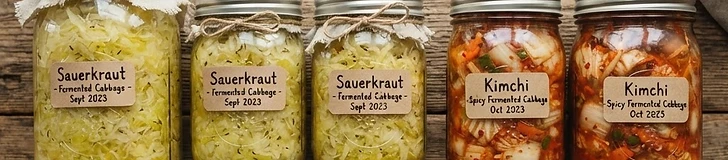
Unlike canning, which uses heat to sterilize, lacto-fermentation recruits Lactobacillus bacteria to convert sugars into lactic acid — a natural preservative and tangy flavor. The acid drops the pH below 4.0, making the food shelf-stable in the fridge (or a cool cellar) for months. Sauerkraut, kimchi, dill pickles, and hot sauce all start here.
The bonus: fermented foods are alive, packed with probiotics, and develop flavors no other method matches.
The salt ratio that matters
Ferment under a 2–3% brine by weight:
- Dry-salted (sauerkraut, kimchi): 2% salt relative to the weight of the sliced vegetables.
- Brine-cured (pickles, carrots): a 2–2.5% brine, by water weight.
Too little salt and mold takes over; too much and the bacteria stall. Weigh your vegetables — eyeballing is the most common beginner's mistake.
The basic steps
- Chop or grate the vegetables.
- Massage with salt (dry-salted), or pack tight and cover with brine.
- Submerge everything under the brine. A weight plus a clean cabbage leaf keeps it down.
- Cover loosely to let CO2 escape. A mason jar with an airlock lid is ideal.
- Ferment at room temperature 1–4 weeks, tasting after the first week.
- When tangy enough, refrigerate or move to a cool cellar to slow the ferment.
What to try first
- Cabbages and carrots — forgiving, fast, cheap mistakes
- Dill pickles with garlic and dill flowers — classic, but pick small firm cucumbers (soft ones go mushy)
- Hot sauce — blend fermented peppers with a little of their brine
When something goes wrong
Kahm yeast — a thin white film — looks scary but is harmless; skim it. Black, pink, green, or fuzzy mold, or a foul smell, means the batch is compost. The cause is almost always under-salting or vegetables peeking above the brine.
Keep a small fermentation log: salt ratio, room temperature, day you started tasting. Your next batch will be sharper.
Once you hit the tang you want, move fermented food to a cool spot. It keeps fermenting — slowly. The flavor keeps deepening month to month — that's the point.