
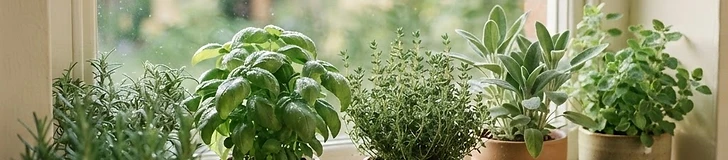
Transforming your windowsill into a productive herb garden allows you to enjoy fresh flavors throughout the winter months, even when temperatures drop well below 32°F outside. This guide covers the fundamentals of light, water, and selection to ensure your indoor culinary garden thrives.
Selecting the Right Spot
Light requirements are the most critical factor for indoor gardening. Most herbs, such as Ocimum basilicum (basil) and Rosmarinus officinalis (rosemary), require at least 6 to 8 hours of direct sunlight. A south-facing window is usually your best bet in the Northern Hemisphere. If your home lacks sufficient natural light, a compact LED grow light placed 6 inches above your plants can prevent the "leggy" growth common in dim indoor environments.
Pots and Drainage
Proper drainage is non-negotiable. Always choose containers that feature drainage holes at the bottom to prevent root rot, which is the leading cause of death for indoor herbs. Use a high-quality potting mix labeled for containers, which provides better aeration than garden soil. Avoid using heavy outdoor topsoil, as it can compact inside a pot and suffocate plant roots.
Tip: When watering, check the top 2 inches of soil with your finger; if it feels dry, it is time to hydrate your plants thoroughly until water drains from the base.
Herb Varieties for Beginners
Start your journey with resilient herbs that tolerate indoor conditions well. These varieties are highly productive and forgiving for novices:
- Petroselinum crispum (Parsley): Thrives in cooler spots.
- Mentha (Mint): Prefers consistent moisture and part-shade.
- Allium schoenoprasum (Chives): Extremely hardy and fast-growing.
Maintenance and Harvesting
Regular pruning encourages bushy, healthy growth rather than tall, sparse stems. When harvesting, use sharp scissors to snip stems just above a set of leaves. This stimulates the plant to produce two new shoots, effectively increasing your yield over time. Keep an eye out for pests like spider mites, which can thrive in the dry, heated air of many US homes during winter, and gently wipe leaves with a damp cloth if necessary.
With a bit of consistent care, your indoor herb collection will provide a steady supply of fresh aromatics for every meal you cook this season.