
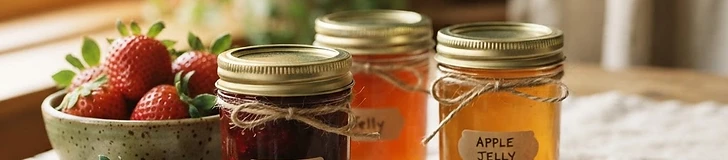
Jam and jelly preserve fruit year-long by cooking it with sugar until the pectin sets. The difference is texture — jam holds fruit pieces, jelly is strained clear. Both rely on the same three things: acid, pectin, and sugar.
The three setting agents
- Pectin: found naturally in underripe fruit, or bought as powder (classic, low-sugar, or liquid)
- Acid: lemon juice or citric acid — pectin won't set without it
- Sugar: preserves color and texture, and works with pectin to form the gel
Test the set with a cold plate: chill one in the freezer, dollop a spoon of hot jam on it, then push with your finger — if it wrinkles, it's done.
Choosing your fruit
Berries, apples, citrus, and stone fruit set easily. Low-pectin fruits — strawberries, peaches — usually need a box of commercial pectin or a quarter portion of underripe fruit added.
The basic process
- Mash or chop your fruit and combine with sugar and acid in a wide, heavy pot.
- Bring to a rolling boil, stirring so nothing scorches.
- Add pectin (or the underripe fruit) and boil hard until the gel test passes.
- Skim foam, ladle into clean jars, and process in a water bath for 10 minutes if you're shelf-canning.
Sugar vs low-sugar
Standard recipes use roughly equal fruit and sugar by weight — about 4 cups of sugar to 4 cups of mashed fruit. Low-sugar pectin lets you cut sugar in half and still gel; the flavor will be tarter and more fruit-forward.
Storing
Sealed, processed jars keep a year in a cool, dark cupboard. Once opened, refrigerate and use within three weeks.