
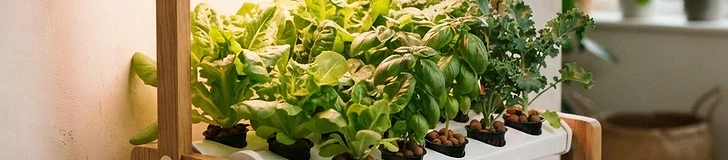
Hydroponics grows plants in nutrient-rich water instead of soil. It uses 90% less water, grows leafy greens roughly 30% faster, and works anywhere — a spare room, a closet, a balcony. It isn't just for techies.
Why it works
Plants don't need soil. They need water, oxygen, minerals, and light. Hydroponics delivers all four directly, so no energy gets spent chasing nutrients in dirt. The result: roots stay small, leaves grow fast, and the system is clean enough for a kitchen.
The beginner ladder
- Mason jar Kratky — lettuce or herbs in net cups held over a jar of nutrient solution, no pump. Silent, cheap, foolproof. Start here.
- Deep water culture (DWC) — an air pump bubbles oxygen through the reservoir. Faster, more hands-on.
- NFT or ebb-and-flow — thin films of water or timed floods. Great for greens at scale; overkill for a windowsill.
The four things you'll buy
- Nutrient solution (two-part) — fills water with all minerals. Measure with the bottle's schedule.
- pH kit — keep the water 5.5–6.5; outside this, lockout happens and leaves yellow for no obvious reason.
- Net cups and clay pebbles — root support without soil.
- A light, 14–16 hours on if you're indoors — leafy greens love consistent light.
Best beginner crops
Lettuce, basil, mint, spinach, Swiss chard, kale. Skip fruiting crops (tomatoes, peppers) until you have a system dialed in — they need more light, support, and attention.
The one habit
Test pH and top up nutrients once a week, swap the reservoir every two weeks. Skip these and even a perfect setup falls apart. Do them, and hydroponics is the most reliable way to grow fresh greens year-round.